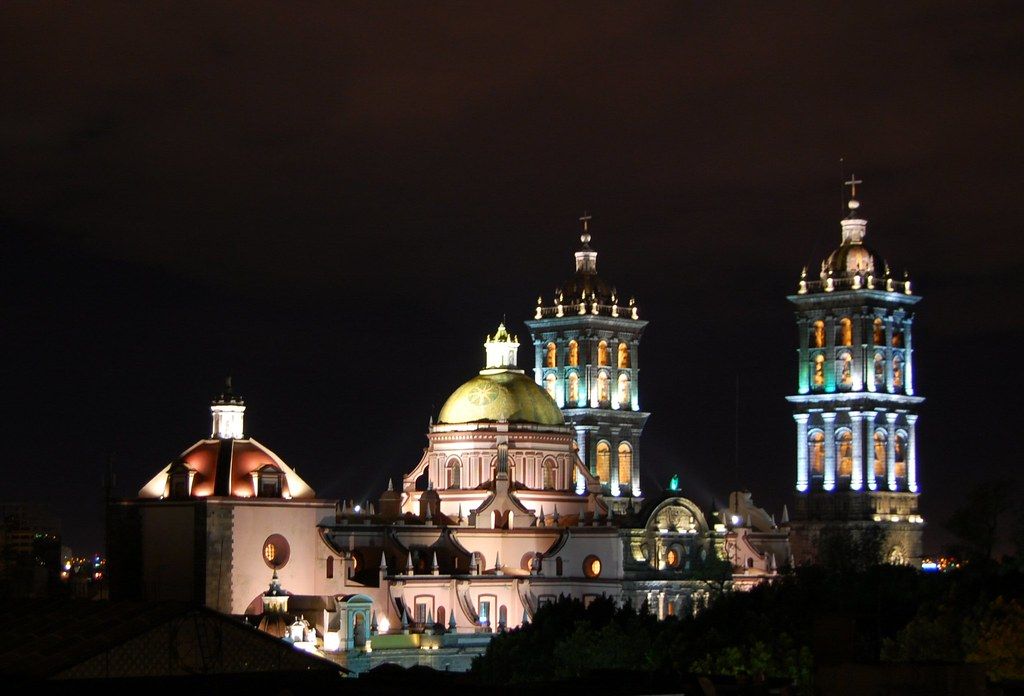
Puebla is the capital of the state of the same name and one of the oldest Spanish cities in Mexico, founded in 1531 on a high plain between volcanoes. Its historic centre, a grid of colonial churches, mansions and tiled facades, is a UNESCO World Heritage Site. A short ride west lies Cholula, a much older place, where a vast pyramid sits under what looks like a natural hill crowned with a church. Together they make one of the best trips out of the capital.
Into Puebla
Buses to Puebla leave often from the eastern bus terminal, known as TAPO, which is close to San Lázaro station on Metro Line 1. Some services also leave from other terminals and from the airport. The ride takes roughly two hours, longer with traffic, and crosses the high pass between the volcanoes Iztaccíhuatl and Popocatépetl, with views of both on a clear day. Bus fares and departure times get revised now and then.
From Puebla, Cholula is about half an hour by local bus or taxi, depending on traffic. A licensed taxi from a stand or a ride-hailing app is simplest. Both places are easy to explore on foot once you arrive.
Puebla's tiled centre
Puebla was planned from the start as a Spanish city, with a strict grid of streets around a central square, the Zócalo. Its wealth came from farming, textiles and pottery, and its builders covered their houses in red brick and coloured tiles. Walk the blocks around the Zócalo and you will see facades patterned in blue, white and yellow, carved stone doorways and painted balconies.
The streets east of the centre, around the Barrio del Artista and the old Barrio de los Sapos, are good for an easy wander, with small plazas and craft workshops. Keep your eyes on the tops of buildings: many have tiled domes, carved cornices and little niches with saints.
The Biblioteca Palafoxiana, founded in the seventeenth century and often called the oldest public library in the Americas, fills a long vaulted room with carved wooden shelves of old books. It keeps its own opening days and charges a small fee.
The cathedral and the Rosary Chapel
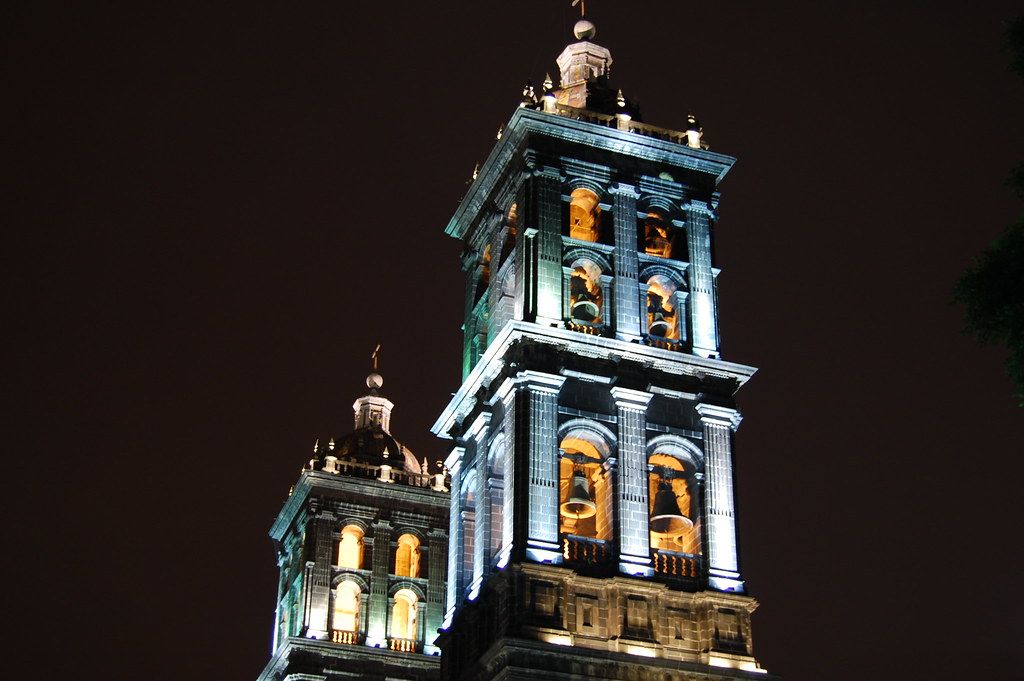
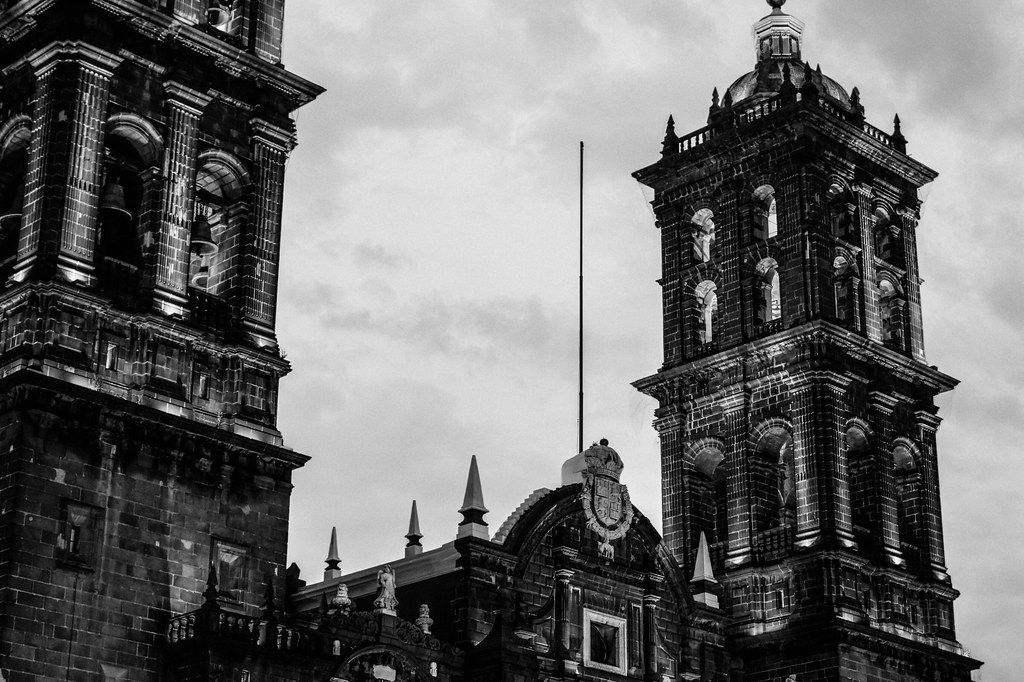
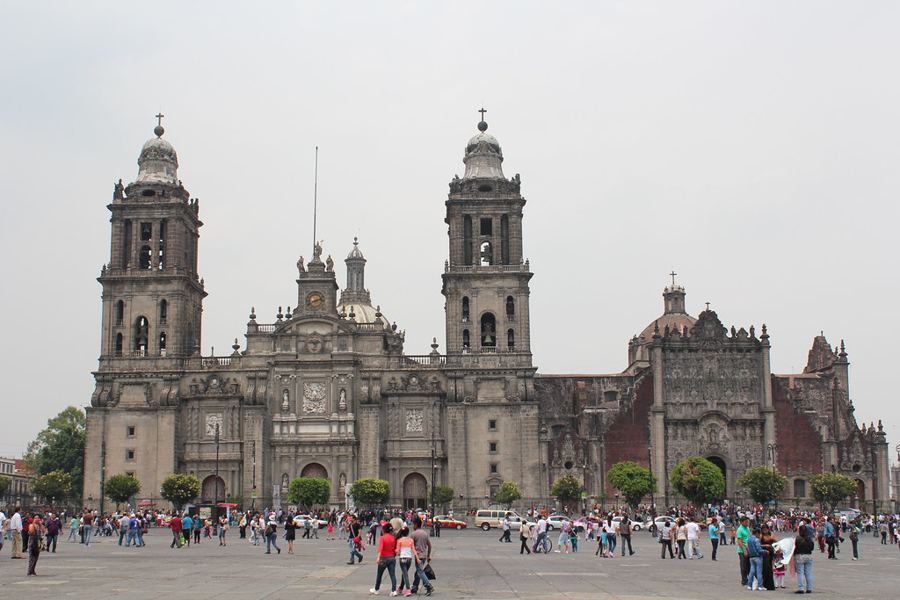
Puebla's cathedral faces the Zócalo, a long building of grey stone consecrated in the seventeenth century, with two of the tallest church towers in Mexico. Inside it is dark and rich, with a high altar, carved choir stalls and side chapels full of gilded altarpieces.
A few blocks north, the church of Santo Domingo holds the Capilla del Rosario, the Rosary Chapel, one of the most extraordinary rooms in Mexico. Every surface is covered in carved and gilded plaster: angels, vines, saints and stars climbing up the walls into the dome. Visit in the morning, and remember it is a working church; keep quiet during services and avoid flash.
Talavera, the city's pottery
Puebla is famous for Talavera, a tin-glazed pottery brought from Spain in colonial times and made here ever since. Real Talavera is made by hand from local clays, glazed and painted in a few traditional colours, usually blue on white with touches of yellow, green and black, and fired twice. You see it on church domes, kitchen walls and fountains all over the city. In 2019 the craft, as practised in Puebla, Tlaxcala and two towns in Spain, was recognised by UNESCO as part of the world's intangible heritage.
 Transfer to station 1·01The Centro Histórico, from the Zócalo out Several workshops in the city offer visits where you can watch the pieces being thrown, painted and fired. Authentic pieces carry a certification mark on the base, and the cheap copies sold in many places do not. Buy what you like, but if you want real Talavera, look for the mark and expect to pay more.
The Great Pyramid of Cholula
From a distance Cholula looks like a small town with a hill in the middle, and on the hill a yellow church with a white dome. The hill is in fact the Great Pyramid of Cholula, known in Nahuatl as Tlachihualtepetl, the made mountain. Built in stages over more than a thousand years, it is the largest pyramid in the world by volume, though not by height, and it was already overgrown when the Spanish arrived.
The Spanish built the church of Nuestra Señora de los Remedios on top in the sixteenth century, and the old temples beneath were forgotten until excavation began in the twentieth. Today you can see restored walls, stairways and plazas on the southern and western sides, and in some years visitors have been able to walk through a section of the tunnels dug by archaeologists inside the pyramid. A site museum shows models and finds.
The path up to the church is steep but short. From the top, on a clear morning, you look out over a town of dozens of church domes and, to the west, the snowy cone of Popocatépetl, often trailing smoke.
Popocatépetl on the skyline
Popocatépetl, at more than five thousand metres, is one of the most active volcanoes in Mexico, and it has been erupting in small bursts for decades. Most days it simply smokes in the distance, which is part of the view. Now and then, ash falls on Puebla and nearby towns, and at times the airport closes for a few hours. The authorities keep a public alert level; it is worth a glance before you travel, and the guide to altitude, air and earthquakes explains the city's own alerts.
Climbing the volcano is off limits, but the views from Cholula and from the pass on the road from the capital are reason enough to sit on the left side of the bus. If you are planning other trips south, Tepoztlán makes a good contrast: smaller, greener and closer, with its own temple on a cliff.