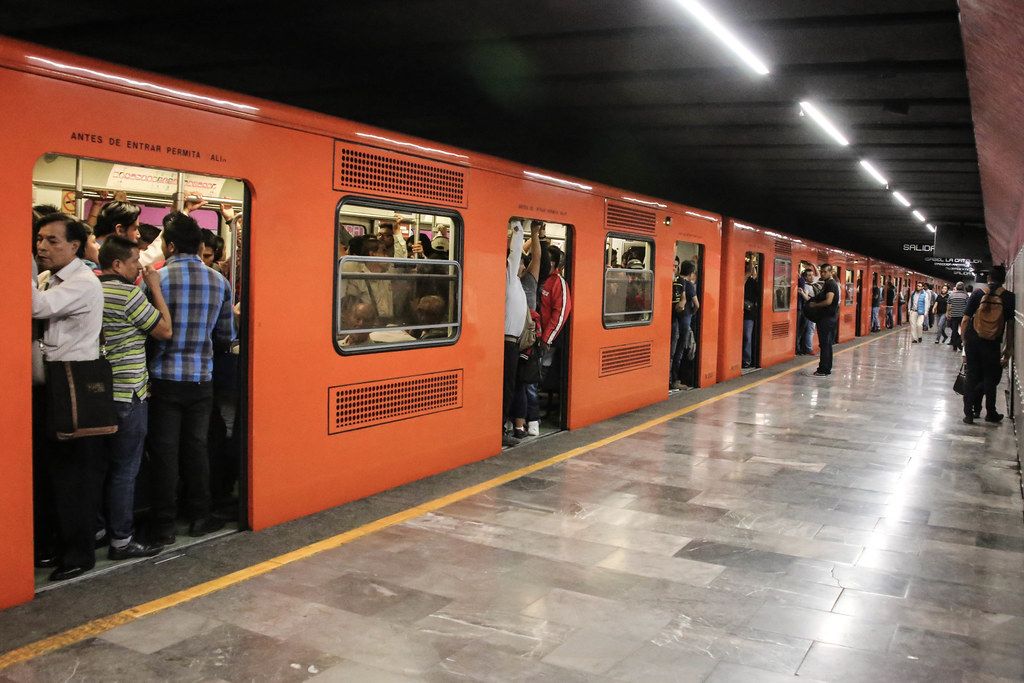
The Mexico City Metro opened in 1969 and now carries millions of people a day on a dozen lines that cross the city from end to end. It is cheap, fast when it runs well, and full of life: musicians, vendors walking through carriages, and every kind of passenger. Above ground, the Metrobús runs long red buses in their own lanes along the main avenues, and in recent years cable car lines have been strung over the hillside districts. Learning to use them opens the city to you.
Stations you can read without Spanish
The Metro was designed in the late 1960s for a city where many people could not read, and each station got its own pictogram as well as a name. A grasshopper marks Chapultepec, whose name means grasshopper hill, and every other station has a small picture of its own, from churches and monuments to animals and tools. The icons are on the signs, the maps and the station walls, and they are a pleasure in themselves.
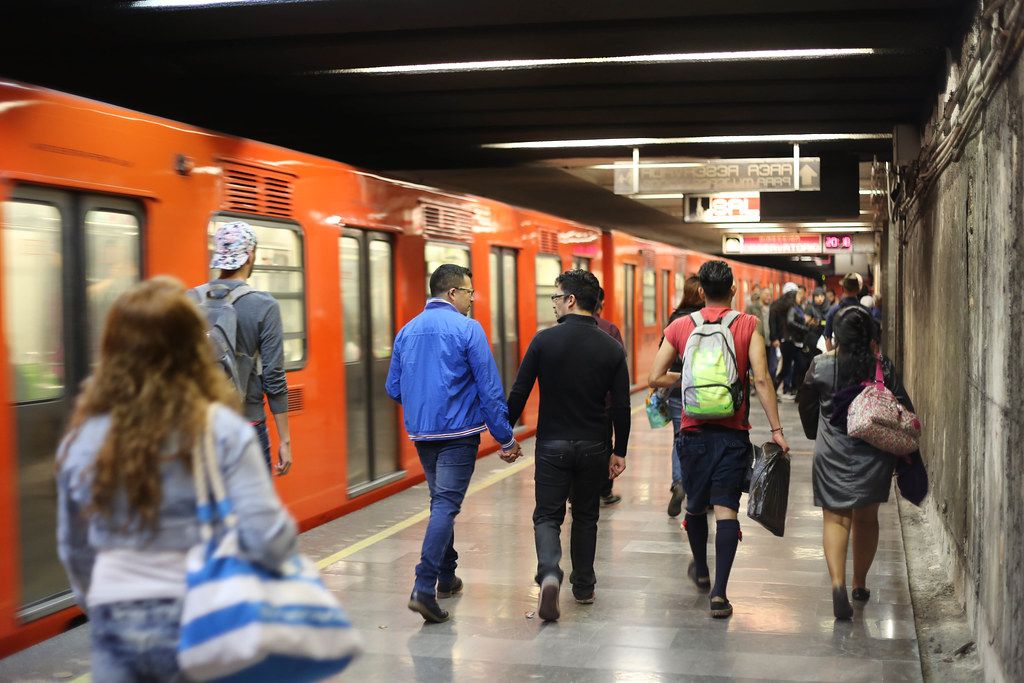
Each line has a number and a colour, and is named by its two end stations. To find your direction, look at the line's colour and the name of the last station in the direction you want, then follow the signs marked Dirección. Where lines cross, the signs say Correspondencia, and the transfer passages can be long. A downloadable or paper map of the network helps more than any app.
Paying: the integrated card
The Metro charges a flat fare for any journey, however far you go and however many times you change lines, as long as you do not leave the system. The fare is very low by international standards.
The simplest way to pay is the rechargeable card, the integrated mobility card, which you buy at station ticket windows or machines and top up at machines in the stations. The same card works on the Metrobús, the light rail, the cable car lines and several other city services, and on the Metrobús it is required, since the buses do not take cash. One card can usually be used for more than one person by tapping it once for each. The rules on which machines take cards, cash or both have been changing as the system is updated.
Rush hour and the reserved carriages
The trains are at their fullest on weekday mornings and evenings, when commuters pour in from the edges of the city. At these times some stations control entry with barriers, and the carriages are packed so tightly that getting on and off becomes a contact sport. If you can, travel in the middle of the day or in the evening after the rush, and avoid lines and stations close to the big transfer points at peak times.
At the front of most trains, and in marked areas on the platforms, carriages are reserved for women and children under twelve, especially during busy hours. Signs and barriers show where they are, and staff often enforce them at the busiest stations. Men should stay out of them; women travelling alone may find them more comfortable. The Metrobús also reserves its front section for women, children, older people and people with disabilities.  Transfer to station 4·02Altitude, air and earthquakes
Pickpockets work the crowded lines, as on any big metro. Wear your backpack on your front, keep your phone and wallet in front pockets or a zipped bag, and do not hold your phone out by the doors. Large suitcases are a real problem on crowded trains and may be refused at busy times; take a taxi to and from the airport or the bus stations if you are carrying heavy luggage.
The Metrobús
The Metrobús is a bus rapid transit system: long articulated buses run in separated lanes down the centre of major avenues, and stop at raised stations where you pay with your card before boarding. Line 1, along Avenida Insurgentes, runs for many kilometres from north to south through Roma, Condesa and toward the university. Other lines cross the Centro, run along Paseo de la Reforma and reach the airport.
It is often a better way to cover short distances on the surface than the Metro, and you see the city as you go. The same rush-hour rules apply: crowded buses, bags in front, and a little patience at the doors. Some lines serving the airport charge a different fare. For the university campus, see the guide to Ciudad Universitaria.
Cable cars over the hills
On the steep edges of the valley, where roads are narrow and buses slow, the city and the neighbouring State of Mexico have built aerial cable car lines. In the capital they are called Cablebús, and they connect hillside neighbourhoods to the Metro network. The neighbouring State of Mexico runs its own lines, called Mexicable. A newer line runs over the Chapultepec area.
They are built for commuters, not tourists, but the views of the valley, the rooftops and the painted houses are remarkable. Ride them in daylight, at quiet times, and pay with the same card where accepted.
When to take a taxi instead
Public transport covers most of what you will want to see, but there are times when a car makes more sense: late at night, when stations empty and some areas feel isolated; when you are carrying luggage; when you are going between two places with a long walk at each end; or in heavy rain, when stations and streets can flood.
At those times, use a ride-hailing app or a licensed sitio taxi from a taxi stand, rather than hailing a car on the street. At the airport and the bus terminals, buy a ticket for an authorised taxi at the official booth inside. The guide to your first week in the DF has more on getting around and staying sensible in the city.