Roma and Condesa sit side by side southwest of the Centro, split by the wide Avenida Insurgentes. They are where many visitors end up staying, and for good reason: the streets are shaded by big trees, the parks are lively, and the architecture shifts every block from French-style mansions to art deco apartments and modernist boxes. They are best seen on foot, at an easy pace.
How the two colonias began
Colonia Roma was laid out in the early 1900s, in the last years of Porfirio Díaz's long rule, as a smart suburb for the new rich. Its grid was planned with broad avenues, roundabouts and plazas, and the houses that went up were heavy with European taste: mansard roofs, carved stone, iron balconies. Many of the grandest survive along Colima, Orizaba, Córdoba and Durango streets, some restored as galleries and cultural centres, others still waiting.
Condesa came a little later. It took its name from the Countess of Miravalle, whose estate covered the land, and its eastern half grew around a racetrack and then a planned garden neighbourhood called the Hipódromo. Building there boomed in the 1920s and 1930s, so where Roma is Porfirian, Condesa is art deco: rounded corners, streamlined balconies, geometric doorways and stepped facades in pale colours.
Both colonias went through hard times. After the 1985 earthquake damaged many buildings here, a lot of families moved out, and for years parts of Roma were run-down and cheap. Artists, students and young families drifted back in during the 1990s and 2000s, and the area turned fashionable. Today rents are high and the arrival of short-term visitors is a live local issue, so it is worth remembering that these are first of all residential streets where people work, raise children and sleep.
Roma Norte: plazas and mansions
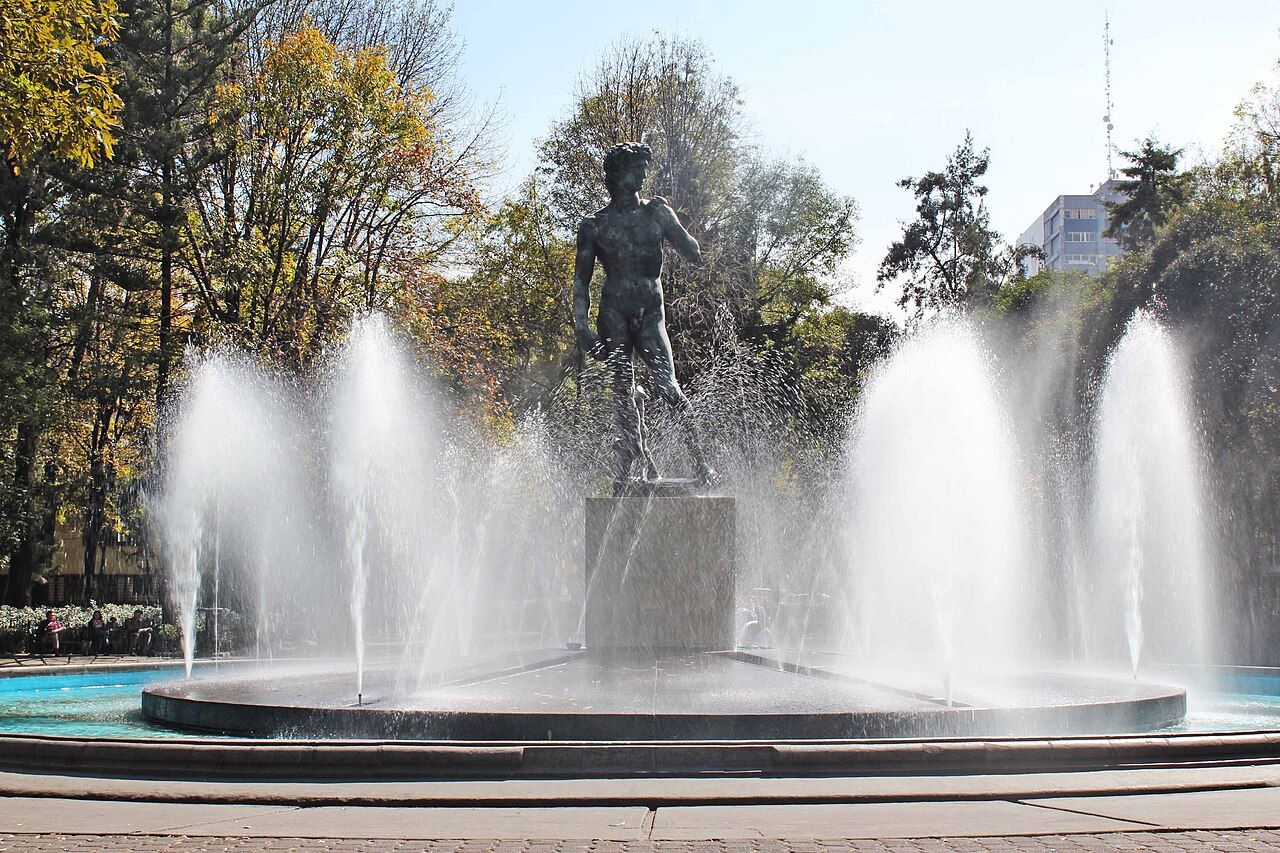
Begin at Plaza Río de Janeiro, a square of old trees and benches around a fountain with a bronze copy of Michelangelo's David. The buildings around it are some of the most striking in the city, including a red brick and slate-roofed apartment house that local people have long nicknamed the Witches' House for its pointed tower.
From there, walk south along Orizaba to Avenida Álvaro Obregón, Roma's main boulevard, with a wide central walkway of benches and sculpture between two lanes of traffic. Turn off it into Colima and Córdoba to look at the houses, then find Plaza Luis Cabrera, a quieter square with fountains that come on at intervals. 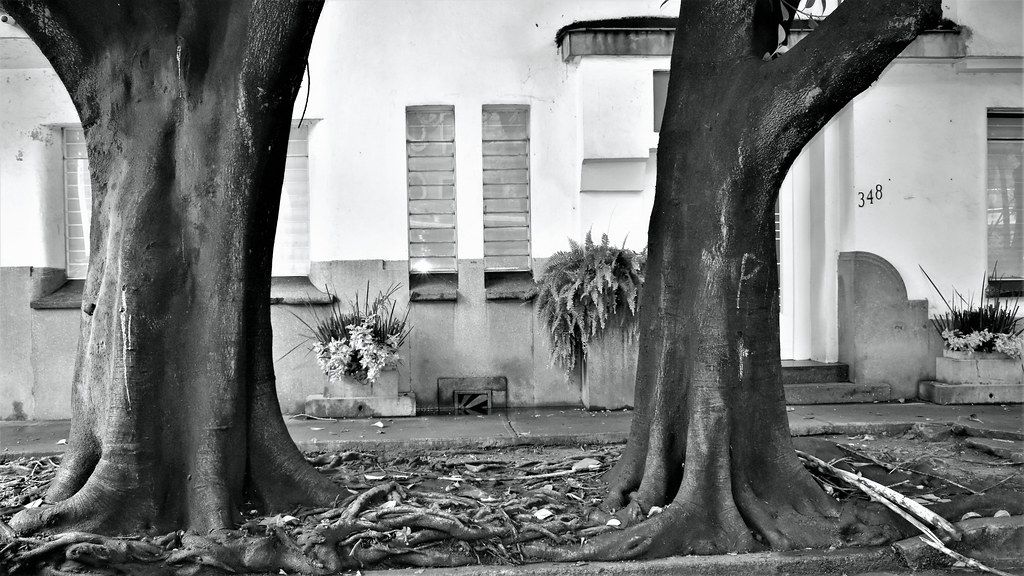
Keep your eyes up. The ground floors have mostly been converted into businesses, but the upper storeys keep their window surrounds, ironwork and little turrets. Many doorways carry the names of the original owners or architects in stone or tile.
Roma Sur, south of Coahuila street, is plainer and more everyday, with fewer mansions and more mid-century apartment blocks. It is worth a short detour if you want to see how most people in the area live, away from the busiest streets of Roma Norte. The boundary between the two is loose, and locals rarely agree on exactly where one ends.
Condesa: the oval and the two parks
Cross Insurgentes and the streets begin to curve. Avenida Amsterdam is the best clue to Condesa's history: it runs as a closed oval because it follows the track of the old racecourse, the Hipódromo de la Condesa, which was turned into a residential district in the 1920s. Its central median is now a long tree-lined path for walkers, joggers and dog owners, with benches and small roundabouts. Walk the whole loop and you will pass dozens of art deco apartment buildings with their names lettered over the doors.
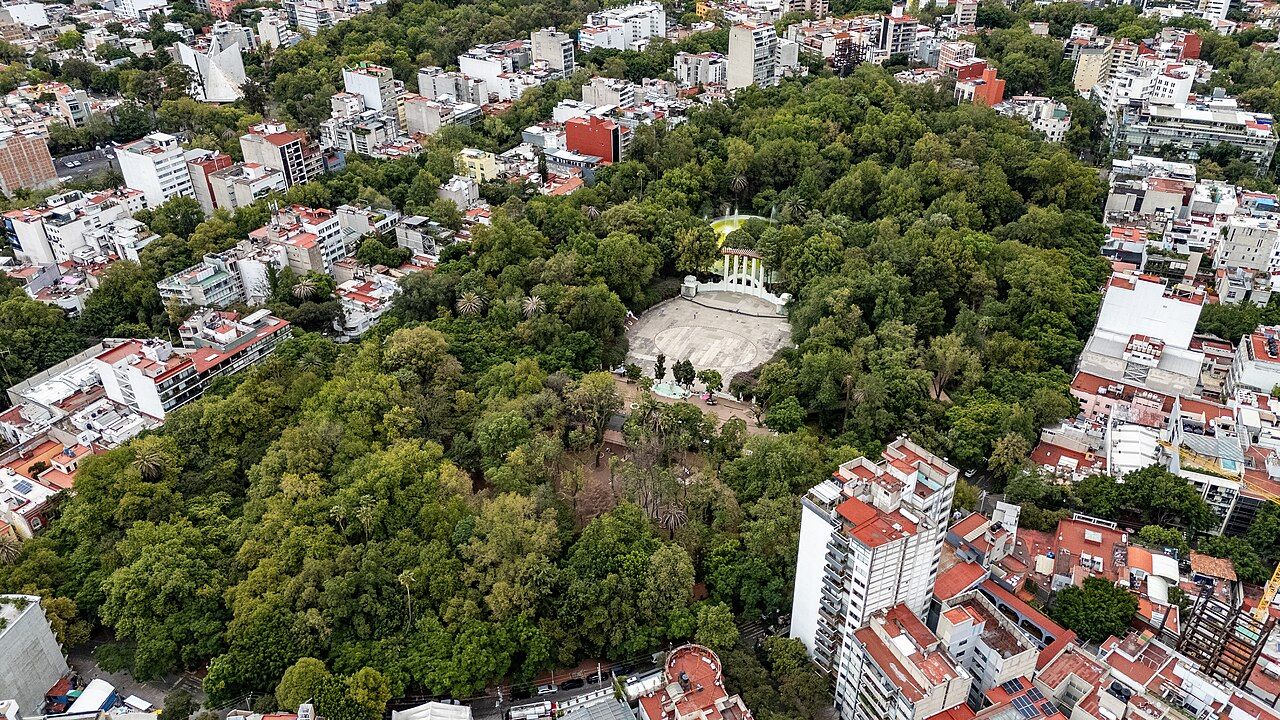
Inside the oval is Parque México, officially Parque General San Martín, the green heart of the neighbourhood. It was planned along with the Hipódromo and keeps many of its original art deco features: a clock tower, a pond with ducks, curving concrete benches, and the Foro Lindbergh, an open-air stage with a pergola where you often find dance classes, children on scooters or rehearsals. In the mornings the park fills with dog walkers and trainers, which is a sight in itself.  Transfer to station 1·05Chapultepec, the city's forest
A short walk northwest takes you to Parque España, smaller and a little older, with a playground and a strip of plants and trees between two avenues. Together the two parks are the reason Condesa feels so green, and the place to rest between streets.
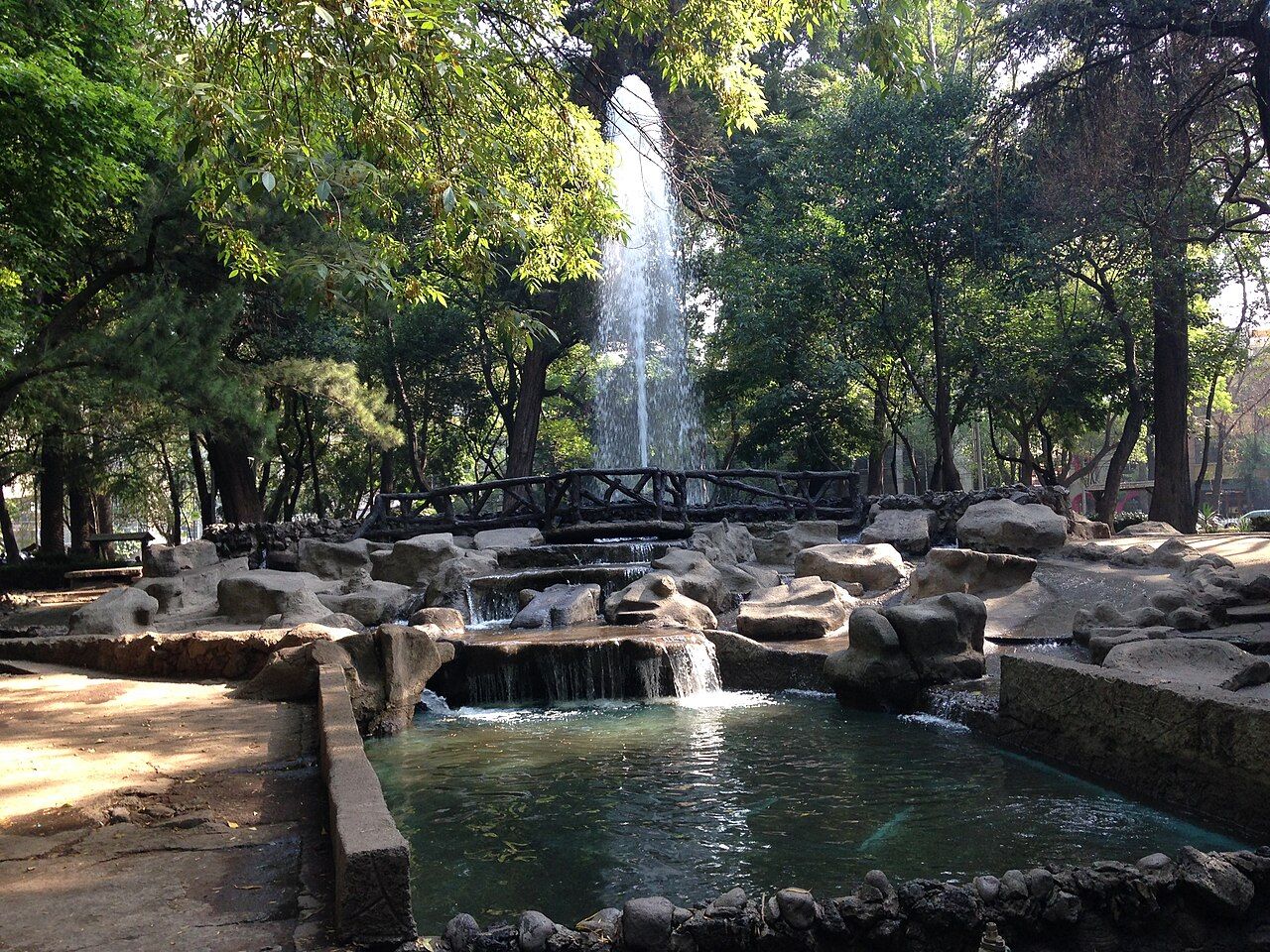
Together the two parks are the reason Condesa feels so green, and the place to rest between streets.
The 2017 earthquake and the gaps in the street
On 19 September 2017, a magnitude 7.1 earthquake struck central Mexico, on the anniversary of the 1985 disaster. Roma and Condesa, built on soft lakebed soil, were among the worst hit parts of the city. Several buildings collapsed, people died in them, and many more were left damaged. Neighbours, students and volunteers dug through rubble for days alongside the rescue teams.
As you walk you will still see signs of it: empty lots behind hoardings, buildings braced with steel, and in some places small memorials with names. Others have been rebuilt or replaced.
It is fine to look and to take in what happened, but be thoughtful about photographs at memorials and do not climb into fenced sites. The guide to altitude, air and earthquakes explains the seismic alert, which you may hear tested on the street speakers.
Walking it well
A good loop runs from Insurgentes Metro, through Roma Norte's plazas and Álvaro Obregón, across Insurgentes into Condesa, around the Amsterdam oval and through Parque México and Parque España. It covers a few kilometres on flat ground and takes half a day at an easy pace, longer if you stop often. Mornings are quieter and cooler; in the rainy season, from roughly June to September, heavy showers often come in the afternoon, so start early.
Both colonias are lively at night, and the main streets stay busy until late. As anywhere in a big city, keep your phone out of reach on crowded corners and use a ride-hailing app or a licensed taxi after dark rather than hailing one on the street. Pavements are uneven, with tree roots and lifted slabs, so watch your feet as much as the facades.
Roma and Condesa also make an easy base for the rest of the city. Metrobús Line 1 runs straight down Insurgentes, the Metro stations of Insurgentes, Sevilla and Chilpancingo sit on the edges, and Chapultepec is a short ride west. North, across the busy Avenida Chapultepec, Reforma and Juárez continue the story of the city's grand avenues.