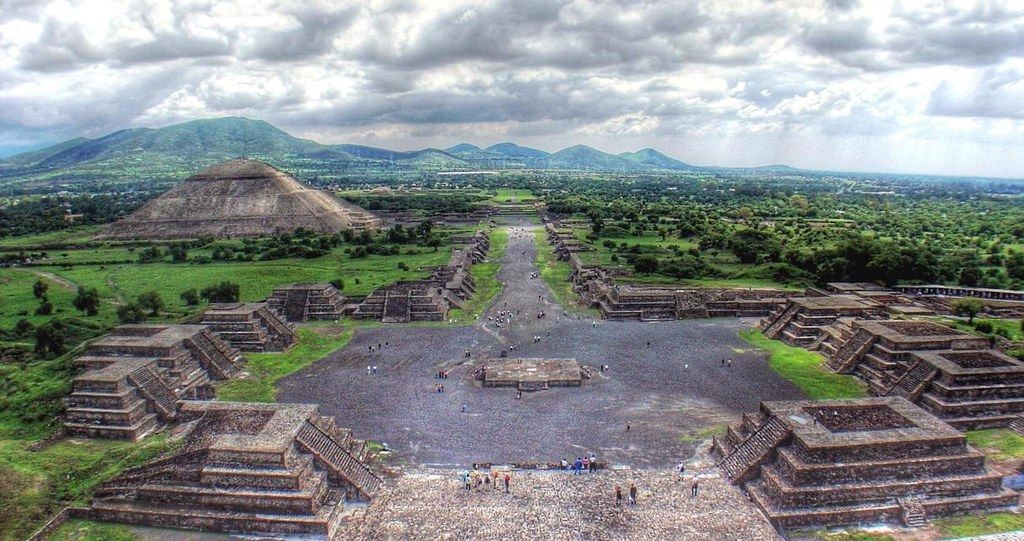
Long before the Mexica founded Tenochtitlan, a great city stood in a side valley northeast of the lake. At its height, in the first centuries of the common era, Teotihuacán may have been home to a hundred thousand people or more, with avenues, apartment compounds, painted temples and trade links reaching as far as the Maya lands. It was already in ruins when the Mexica found it, and they gave it the name it carries today, usually translated as the place where the gods were made. Nobody knows what its own people called it.
Today it is one of the most visited archaeological sites in Mexico and a UNESCO World Heritage Site. It is also an easy day trip from the city, and the single best piece of advice is to go early.
Getting there by bus
Buses to the pyramids leave from the Terminal Autobuses del Norte, the northern bus station, which has its own stop on Metro Line 5. Inside the terminal, look for the counter selling tickets to the pyramids; the buses run frequently through the day from early morning. The trip usually takes about an hour, more in traffic, and the bus drops you near one of the main gates.
For the return, buses pick up from the same roads near the gates; ask the driver on the way out where to wait. If you are new to the Metro, the guide to the Metro and Metrobús explains how to reach the terminal. Organised tours exist, but the public bus is cheap, simple and lets you set your own pace.
The site has several entrances along a ring road. A good plan is to enter at the southern gate near the Ciudadela, walk north along the main avenue and leave from a gate near the Pyramid of the Moon or the Pyramid of the Sun. Entry carries a fee, and the site is open daily with set hours.
The Ciudadela and the Feathered Serpent
At the southern end of the site is the Ciudadela, a vast sunken square enclosed by platforms, large enough to hold a whole town's population for a ceremony. Inside it stands the Temple of the Feathered Serpent, the most richly carved building at Teotihuacán. Its stepped sides are lined with great stone heads: feathered serpents with fangs, alternating with a strange, mask-like headdress that some read as a storm or war serpent.
Traces of the original paint survive, and you can imagine the temple when it was coloured red, green and blue. Excavations in recent decades found a long tunnel under the temple and the remains of many people who were sacrificed when it was built. A full-size painted reconstruction of the temple stands in the National Museum of Anthropology, which is a good place to see the colours as they may have been.
The Avenue of the Dead
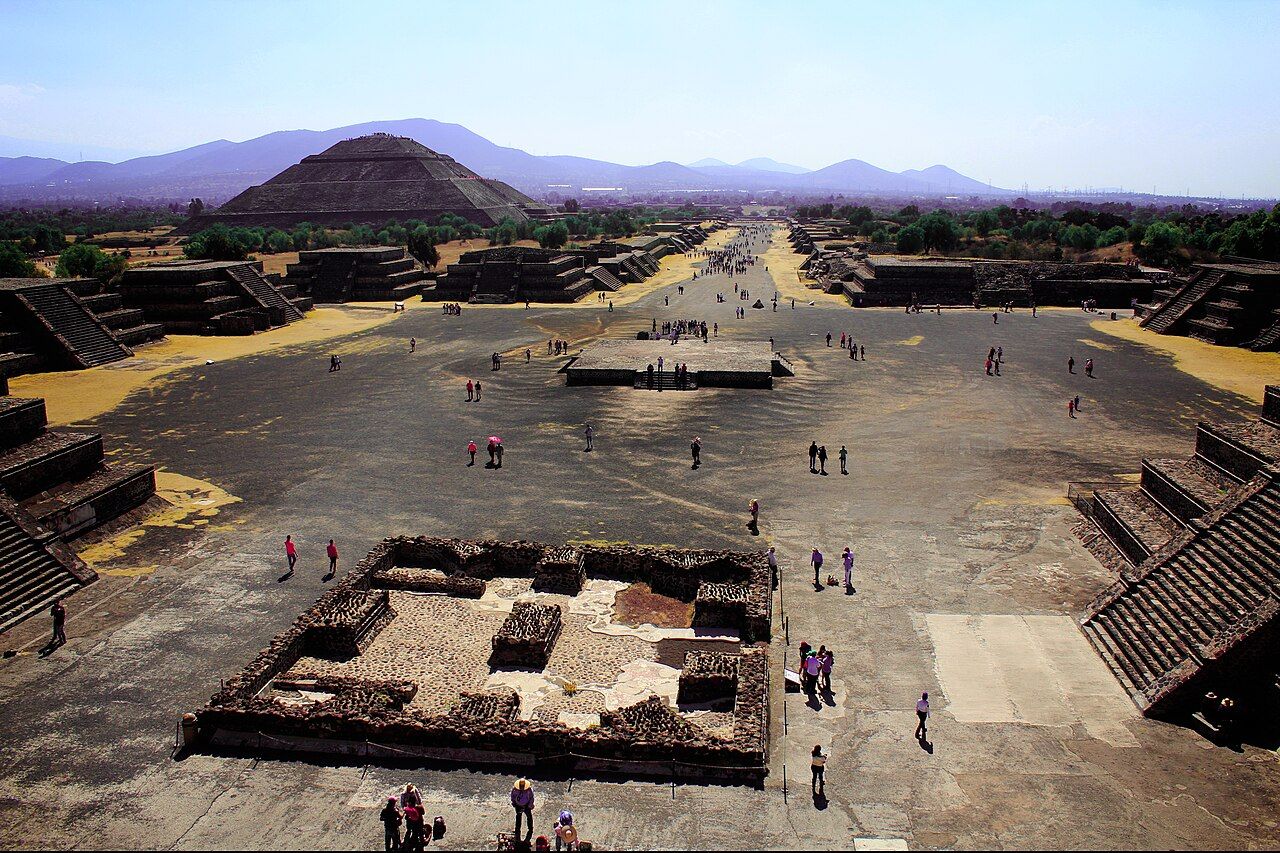
From the Ciudadela, the Calzada de los Muertos, the Avenue of the Dead, runs north for more than two kilometres toward the Pyramid of the Moon. The Mexica named it, thinking the mounds along its sides were tombs; they are in fact the bases of temples and residences. The avenue is not one flat road but a series of plazas, with steps and walls you climb up and down as you go.
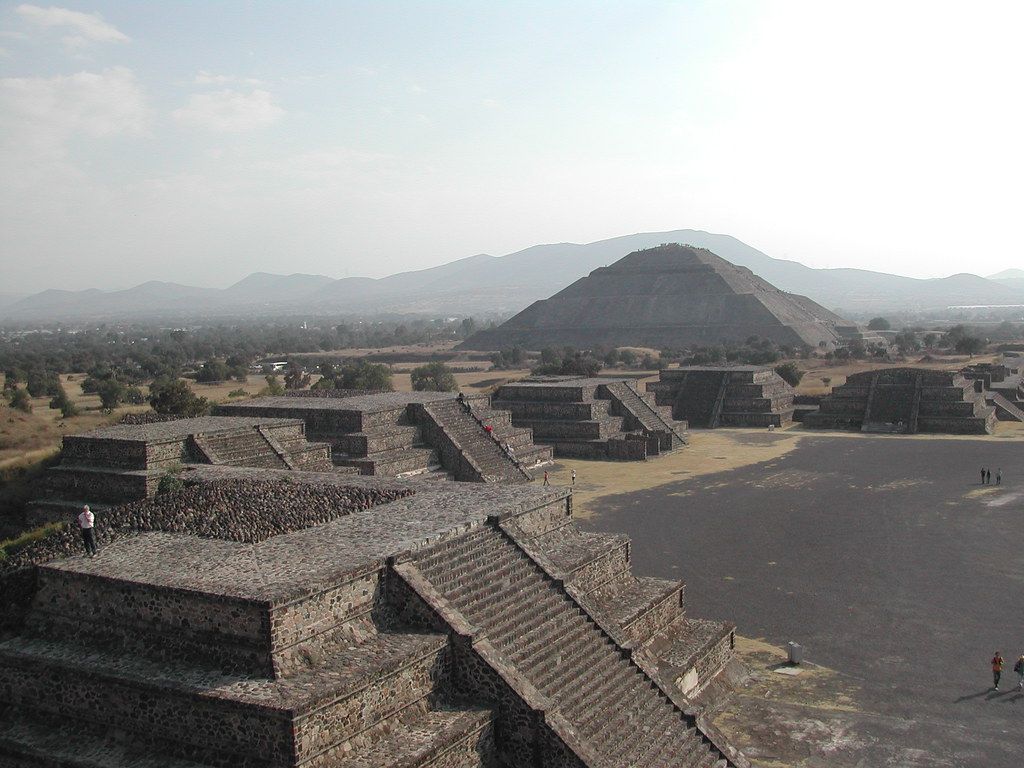
The city was laid out on a careful grid, turned slightly east of true north, and the avenue was its spine. The mountain Cerro Gordo rises behind the Pyramid of the Moon, and the line of the avenue leads your eye straight to it. Walk slowly and look at the stonework: in places the small stones pressed into the mortar between the larger blocks still show how the walls were finished.
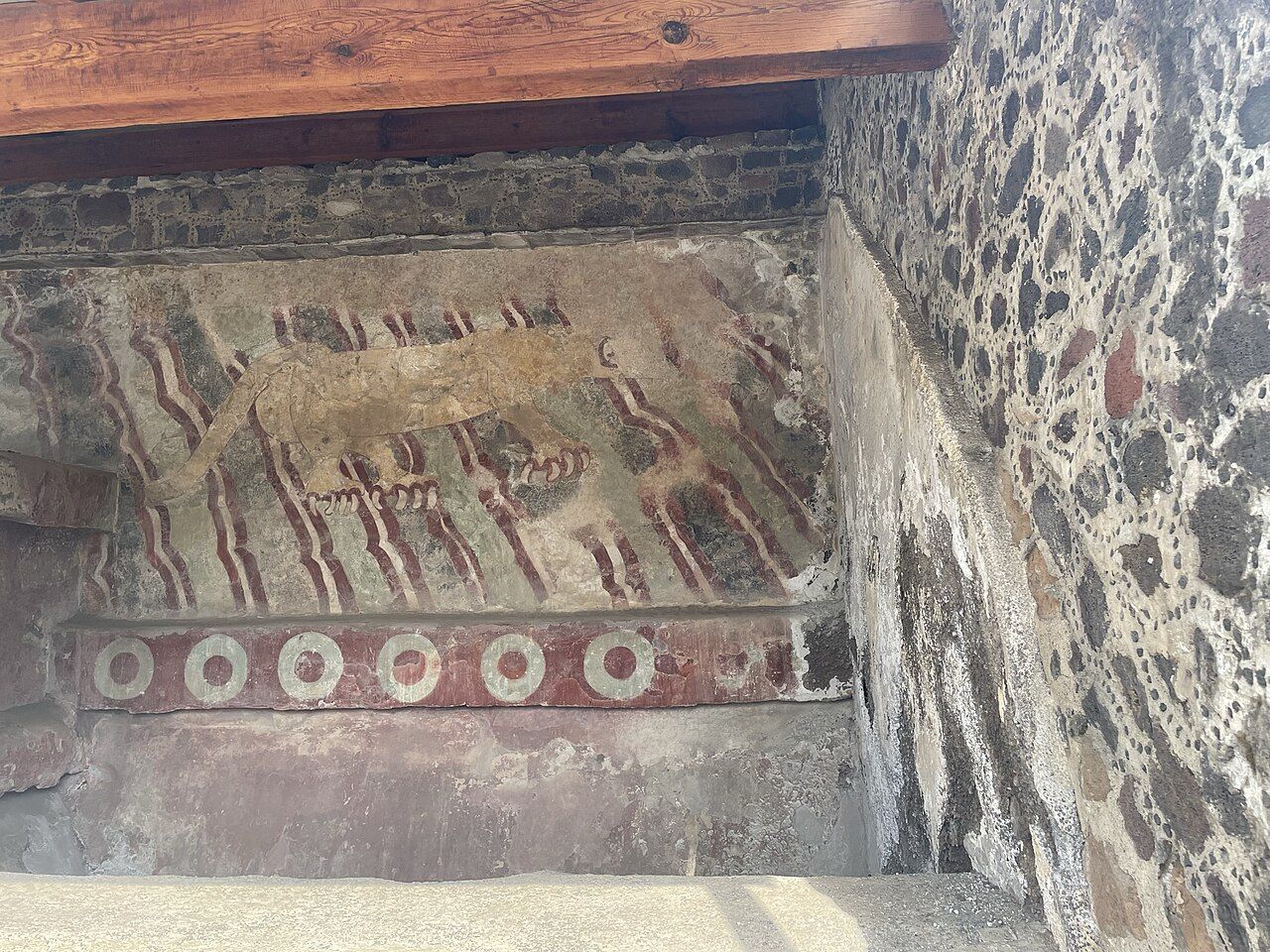
Halfway along, a side path leads to the Pyramid of the Sun. Near the Pyramid of the Moon, smaller palace compounds such as Quetzalpapálotl keep carved pillars and patches of mural painting under roofs.  Transfer to station 3·03Puebla and Cholula There are also site museums, one near the Pyramid of the Sun and another devoted to Teotihuacán's murals near the Moon gate, if you want shade and context.
The pyramids of the Sun and the Moon
The Pyramid of the Sun is the largest building at Teotihuacán and one of the largest pyramids in the world. It was built in the early centuries of the city's life, over a cave that may have been sacred long before. Its base is close in size to that of the Great Pyramid of Giza, though it is much lower. Its stepped profile echoes the mountains around it, and from its foot it feels enormous.
The Pyramid of the Moon closes the northern end of the avenue, set on slightly higher ground so its top lines up with the larger pyramid. In front of it lies the Plaza of the Moon, ringed by smaller platforms. From its lower terraces, when they are open, you get the classic view straight down the avenue.
Climbing rules have changed. For decades visitors climbed the Pyramid of the Sun freely, but in recent years climbing the big pyramids has been restricted or stopped to protect the structures, and the rules have changed more than once. Even where some steps are open, they are steep and uneven, and there are often no handrails.
It was already in ruins when the Mexica found it, and they gave it the name it carries today, usually translated as the place where the gods were made.
Sun, altitude and timing
Teotihuacán lies at about 2,300 metres, a little higher than the city, and there is almost no shade along the avenue. The sun is strong even on cool days, and many visitors underestimate it. Wear a wide hat and sunscreen, carry plenty of water, and rest in the shade of the museums or the trees near the gates. If you have only just arrived in Mexico, read the guide to altitude, air and earthquakes first and give yourself a day or two before the trip.
The dry season, from roughly October or November to April, brings clear mornings and blue skies. In the rainy months, storms often roll in during the afternoon, with lightning on the open ground: start early and be ready to leave. Early mornings are also quieter, before the tour coaches arrive late in the morning, and you may have the avenue nearly to yourself for the first hour. Weekends are busier, and on the spring equinox, around 21 March, huge crowds gather to greet the sun.
You will meet hawkers selling whistles that roar like jaguars, obsidian carvings and souvenirs all along the avenue. A polite no, said once with a smile, is enough. Food and drink are sold near the gates, but bring your own water and a snack to keep moving. With a full morning on the site and the bus there and back, it is a day well spent and an easy one to plan from any part of the city.