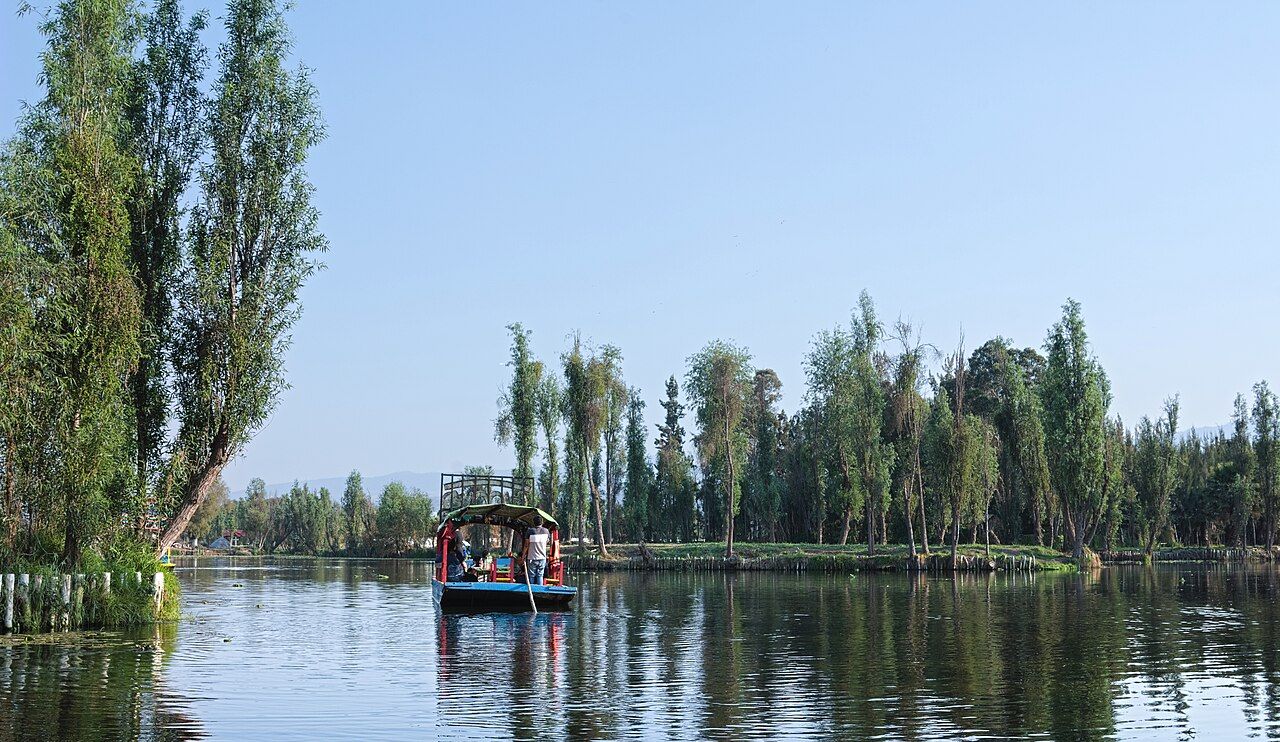
Xochimilco, in the far south of Mexico City, is the last large survival of the lake world that once filled the Valley of Mexico. Its name means the place of the flower field, and for centuries farmers here grew flowers and vegetables on artificial islands in the shallow water. Today it is best known for weekend parties on brightly painted boats, but that is only one side of it. With an early start and a little planning, you can see the canals as they were meant to be seen: quiet, green and full of birds.
The chinampas
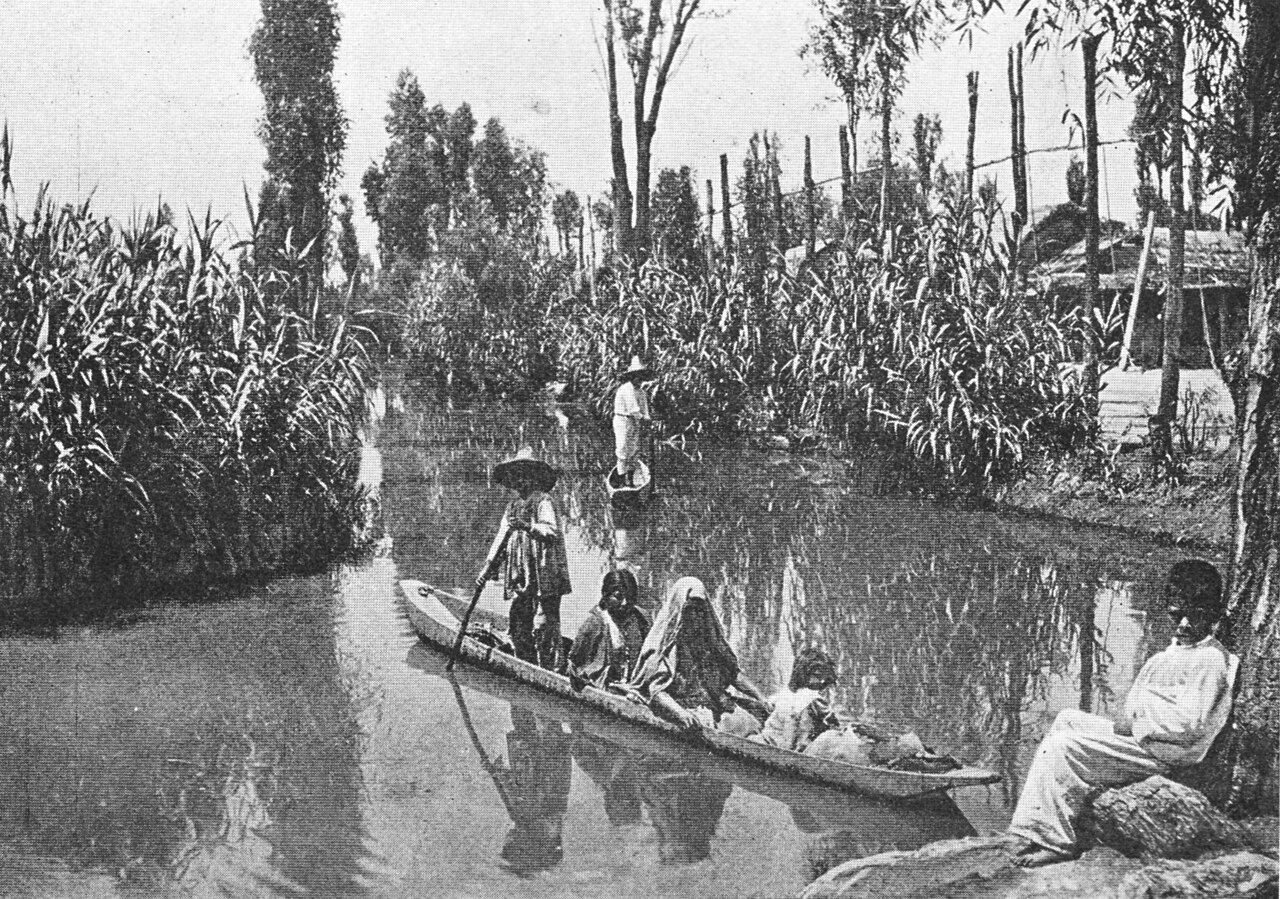
The key to Xochimilco is the chinampa. Long before the Spanish arrived, people around the lakes built rectangular plots in the water by layering mud, plants and lake sediment inside frames of stakes and woven reeds. Willow-like trees called ahuejotes were planted along the edges, and their roots held the plots together. The result was a patchwork of fertile fields separated by narrow canals, farmed by canoe.
This system fed Tenochtitlan, and it still works. Some families in Xochimilco continue to farm chinampas, growing vegetables, herbs and flowers, and several projects have worked to restore traditional practices and sell their produce. Xochimilco was listed by UNESCO in 1987 together with the Centro Histórico, largely because of this living landscape. It is under strain from urban growth, polluted water and falling water levels, and the canals you see are a fraction of what once existed.
Trajineras and how the boats work
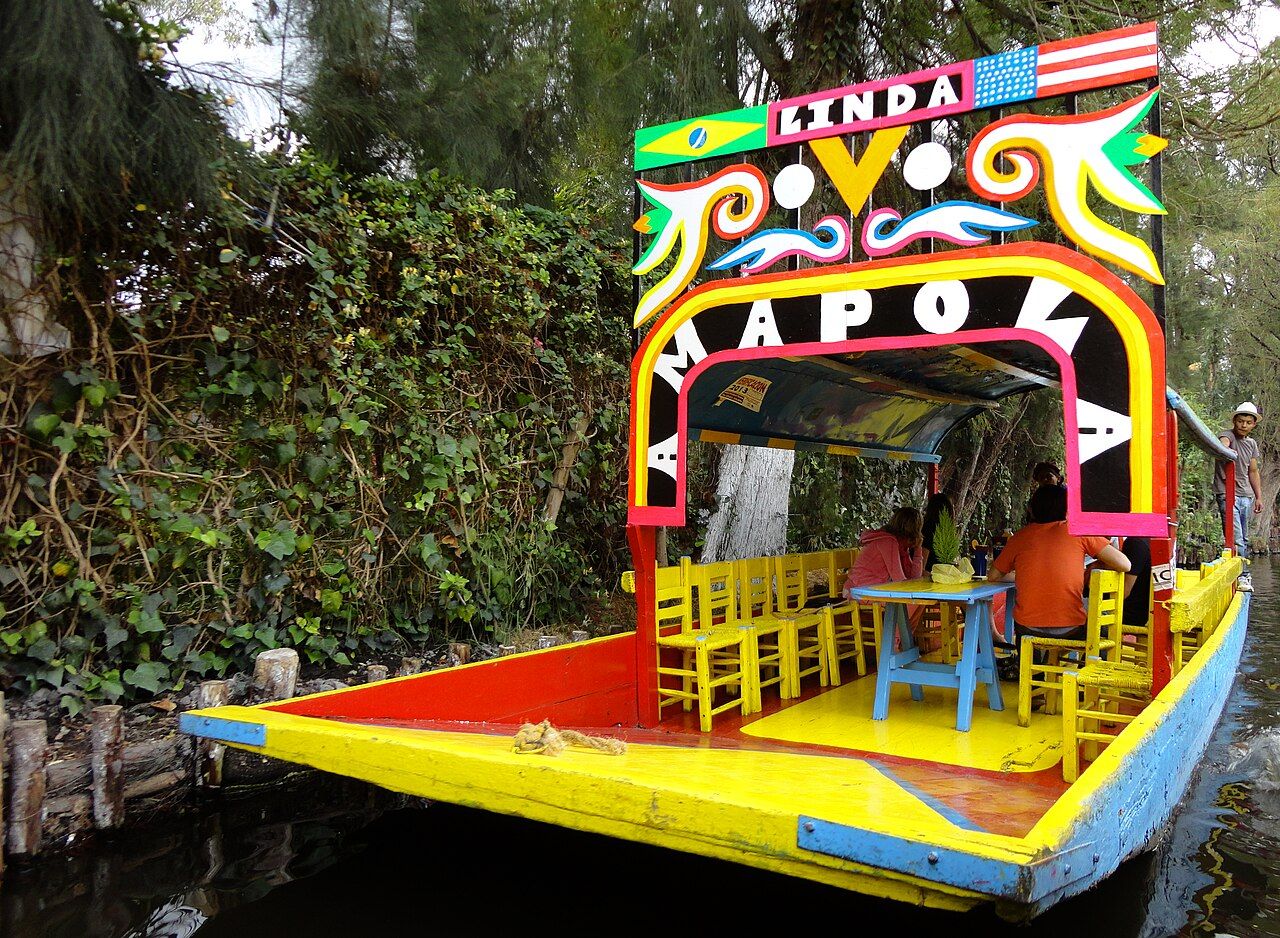
The flat-bottomed boats called trajineras carry visitors through the canals. They are painted in strong colours, with a small roof, a long table down the middle and chairs on each side, and a boatman who pushes the boat along with a long pole. Each boat has a name painted on its arch, traditionally a woman's name.
Boats are hired as a whole, not by the seat, and rates are set by the hour, with official prices usually posted at the embarcaderos. One or two hours is enough to see the canals and get a sense of the place. A tip for the boatman at the end is normal.
As you drift, smaller boats come alongside offering music, drinks, snacks and flowers. You can wave them off politely if you prefer silence.
Busy embarcaderos and quieter ones
The trips start from several landing stages, called embarcaderos. The busiest is Nuevo Nativitas, close to the centre of Xochimilco, where on weekend afternoons the main canals turn into a slow-moving traffic jam of boats with mariachi bands, groups celebrating birthdays and loud music. It can be fun if that is what you want, and Sunday afternoons are the peak.
For a quieter trip, go to Cuemanco, on the north side of Xochimilco by the Olympic rowing canal built for the 1968 Games. From here, boats head out through canals lined with chinampas, ahuejotes and herons, toward the ecological reserve areas. Trips from Cuemanco tend to be calmer and greener. Some boatmen offer longer trips into the wetlands, toward small chinampa farms, and on to the well-known island where dolls hang from the trees; ask at the embarcadero about times and costs.
The single best tip is to go early on a weekday. 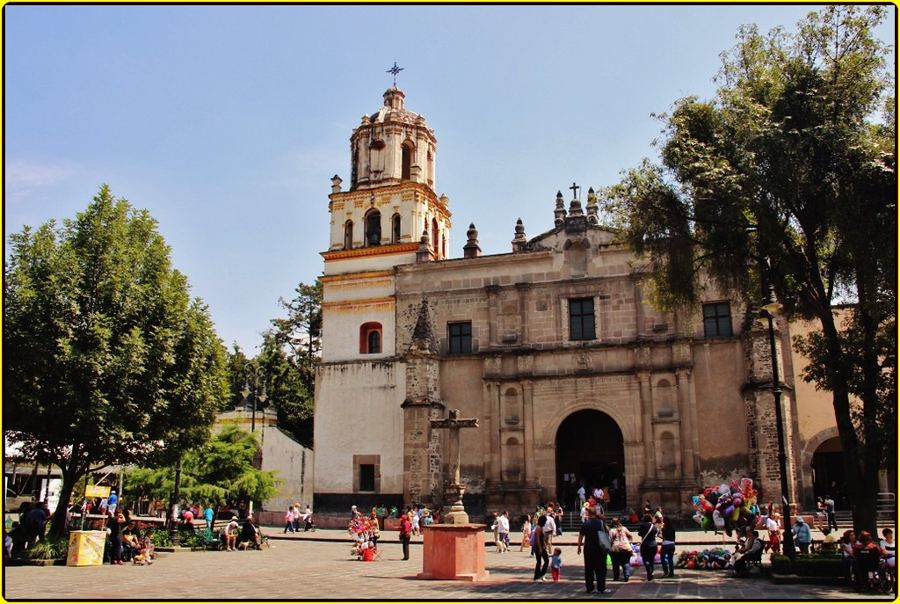 Transfer to station 1·03Coyoacán, the old village in the city In the morning, the light is soft, mist can still sit on the water, the canals are nearly empty and you hear birds instead of speakers. Early boats are also easier to agree on.

The axolotl
Xochimilco's most famous resident is the axolotl, a salamander that never really grows up: it keeps its feathery external gills and lives its whole life in the water. It is found in the wild only in the canals of Xochimilco and is critically endangered, threatened by pollution, introduced fish and the loss of clean water. Conservation groups and some chinampa farmers protect stretches of canal as refuges, and a few places in Xochimilco show axolotls in tanks and explain the work.
The axolotl has become a symbol of the city, appearing on murals and on the fifty-peso note. If you want to see one up close in the centre, there is a small axolotl museum in Chapultepec Park. Do not buy wild axolotls or take them from the water.
Parque Ecológico de Xochimilco
Next to Cuemanco is the Parque Ecológico de Xochimilco, a large ecological park created in the 1990s as part of a project to restore the area. It has lakes, wetlands, paths for walking and cycling, and areas for birds, and it is a calm green space away from the boats. It is a pleasant extra stop if you start at Cuemanco.
Getting there and practical sense
Take Metro Line 2 to its southern end at Tasqueña, then change to the Tren Ligero, the light rail, and ride it to its last stop, Xochimilco. From there, a short walk or a bicycle taxi gets you to the central embarcaderos. For Cuemanco, a taxi or ride-hailing car is simpler; the trip from the centre of the city can take an hour or more in traffic. The guide to the Metro and Metrobús explains the cards and connections.
The sun on the water is strong, so bring a hat, sunscreen and water, plus a light jacket for early mornings. Carry cash in small notes for the boat, the boatman's tip and anything you buy from the passing boats. Mobile signal can be patchy. If you have children with you, keep them seated; the boats are stable, but the canals are deep in places. Xochimilco combines well with Coyoacán on the way back north, as long as you leave time for both.