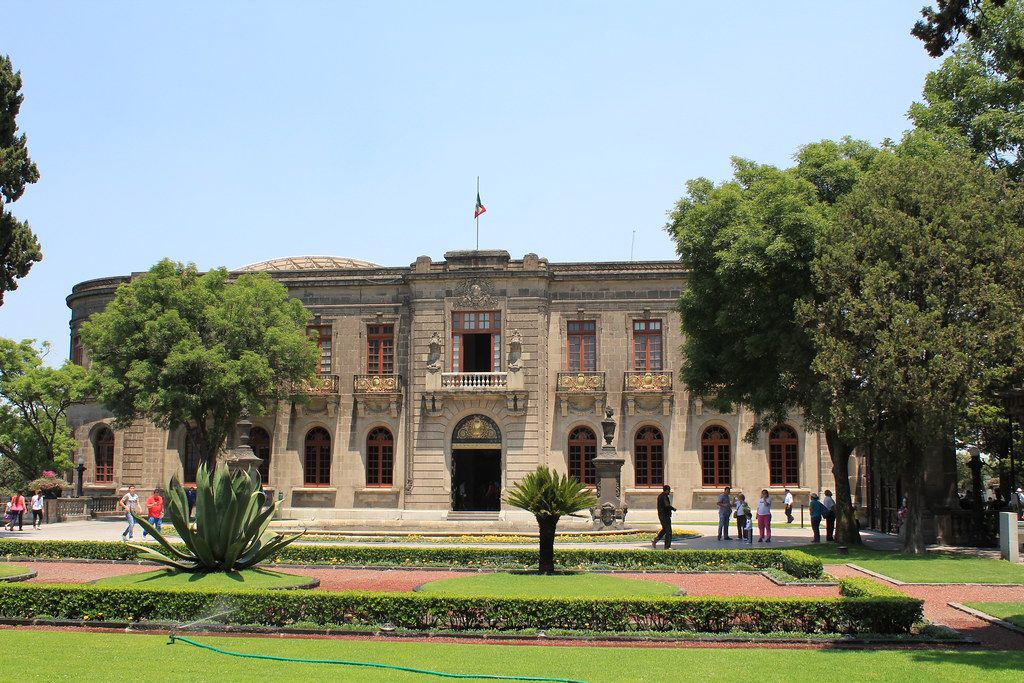
Bosque de Chapultepec, the Chapultepec Forest, is one of the largest city parks in Latin America, a great swathe of woodland, lakes and lawns on the western side of the centre. The name comes from Nahuatl and means grasshopper hill, after the rocky outcrop that rises out of the trees. The Mexica rulers drew fresh water from its springs and kept a retreat here; later came viceroys, emperors and presidents. Today it belongs to everyone, and on a Sunday it seems as if half the city is here.
How the park is laid out
Chapultepec is divided into sections. The first section, closest to the centre, holds the hill and castle, the main lake, the zoo and most of the famous museums, and it is where most visitors spend their time. The second section, further west across a main road, has larger lakes, a children's museum and amusement rides. The third section is wilder and more wooded.
More recently, a long-running project has worked to link and improve the sections and add new spaces, including a fourth section on land that used to belong to the army, and the former presidential residence of Los Pinos, which opened to the public as a cultural centre in 2018. Parts of this are still being built or changed, so expect new paths, gardens and openings.
Most people arrive at Chapultepec Metro station on Line 1, near the main entrance by the monument to the Niños Héroes. Auditorio station on Line 7 is closer to the anthropology museum, and Metrobús Line 7 along Reforma stops near the museums.
The castle on the hill
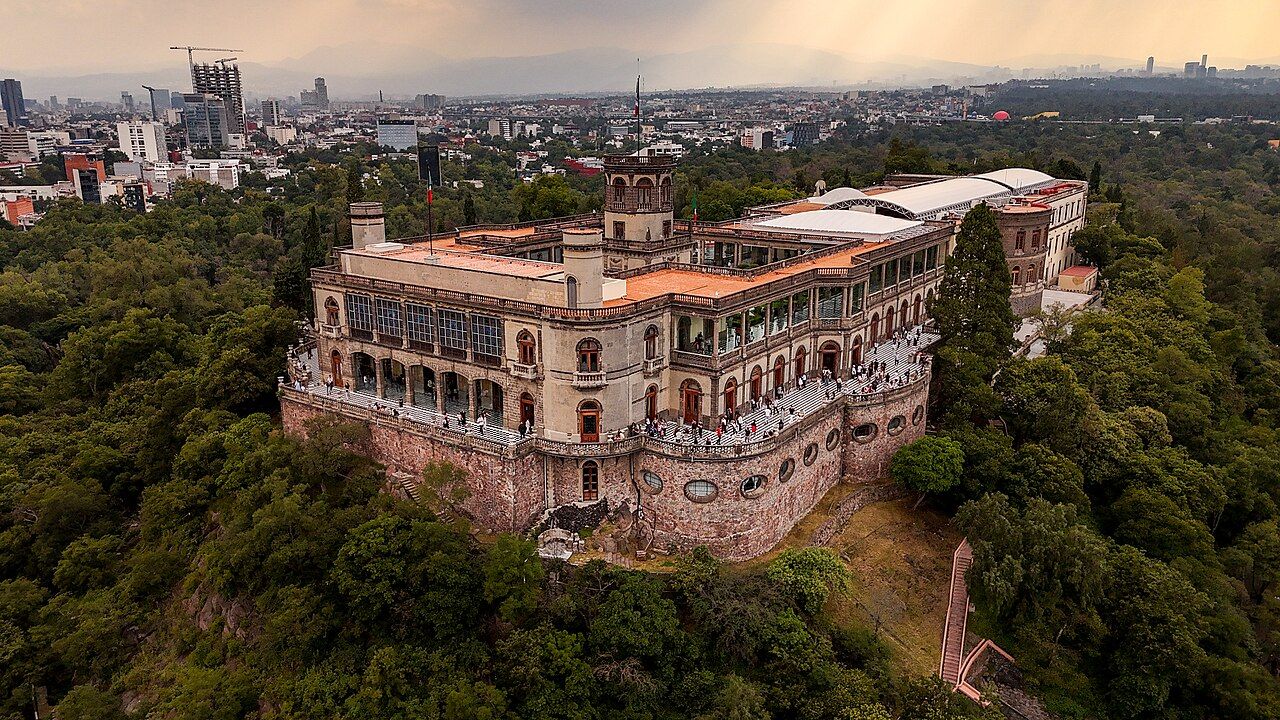
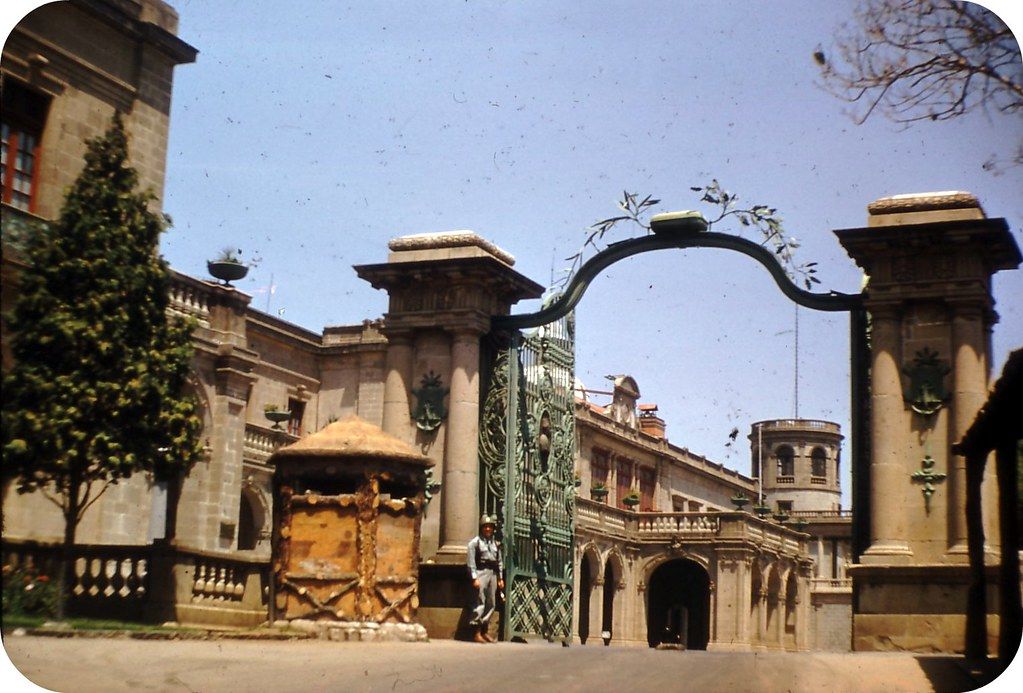
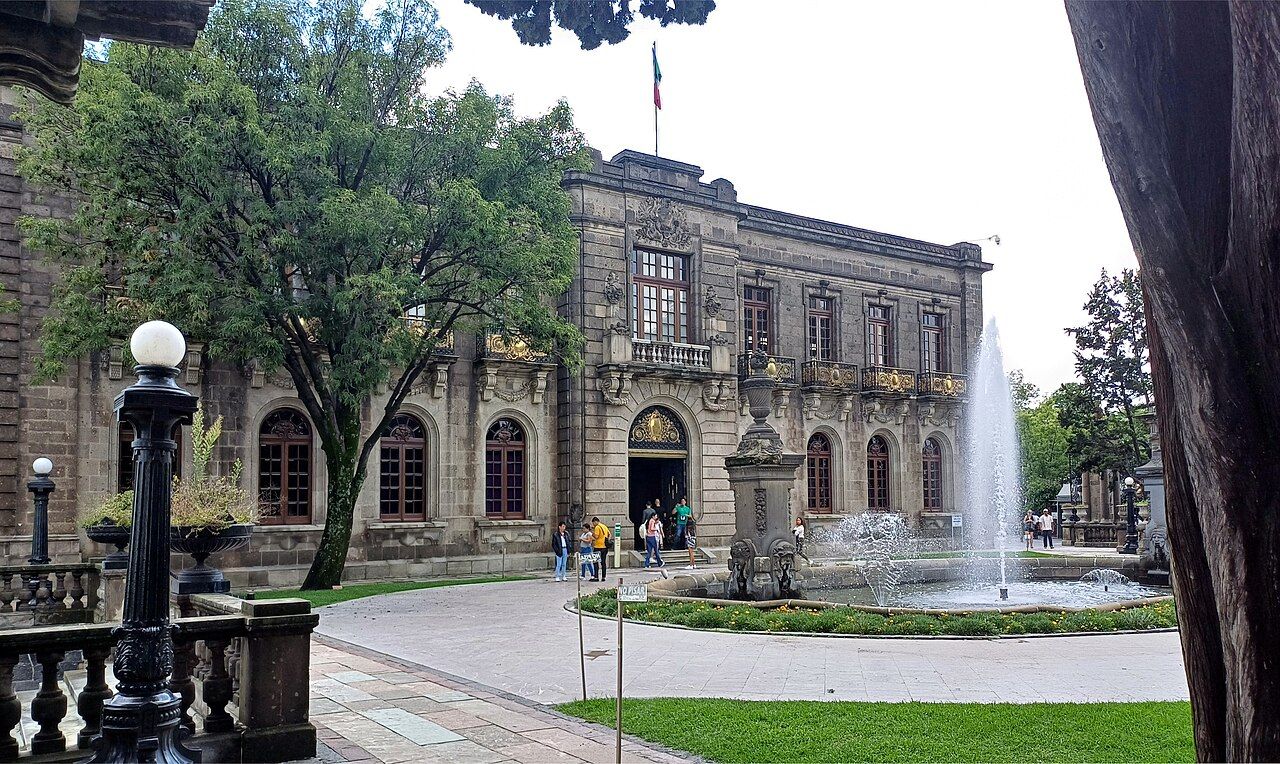
Chapultepec Castle crowns the hill, its terraces looking down Paseo de la Reforma toward the city centre. It began in the late eighteenth century as a summer house for a Spanish viceroy, became a military academy, and in 1847 was the scene of a battle in the war with the United States. Mexican tradition remembers six young cadets, the Niños Héroes, who died defending it, and their memory is everywhere in the park.
In the 1860s the Emperor Maximilian and Empress Carlota turned the building into their palace, and later presidents lived here until the 1930s. It now houses the National History Museum. The ground floor galleries tell Mexico's story from the conquest to the Revolution, with murals by Juan O'Gorman and David Alfaro Siqueiros among others. Upstairs, the furnished rooms of Maximilian and Carlota and later presidents lead out to a rooftop garden and terraces with views across the city.
From the castle terraces you can see Reforma run straight toward the centre, the avenue Maximilian laid out to link his palace with the city. The walk up the hill is a steady climb along a paved road. At 2,240 metres it can leave you breathless if you have just arrived, so take it slowly. A small road train has carried people up at times. The castle is closed on Mondays and fees apply.
At the foot of the hill, the Altar a la Patria honours the Niños Héroes with six tall white columns, one for each cadet, around a central figure. Official ceremonies take place here every September. A short way west, Los Pinos, the presidential residence for most of the twentieth century, was opened to the public in 2018. You can walk through the gardens and the main house, where rooms that were once off-limits now hold exhibitions and events. It is an odd and interesting visit, and usually free.
The lake and the woods
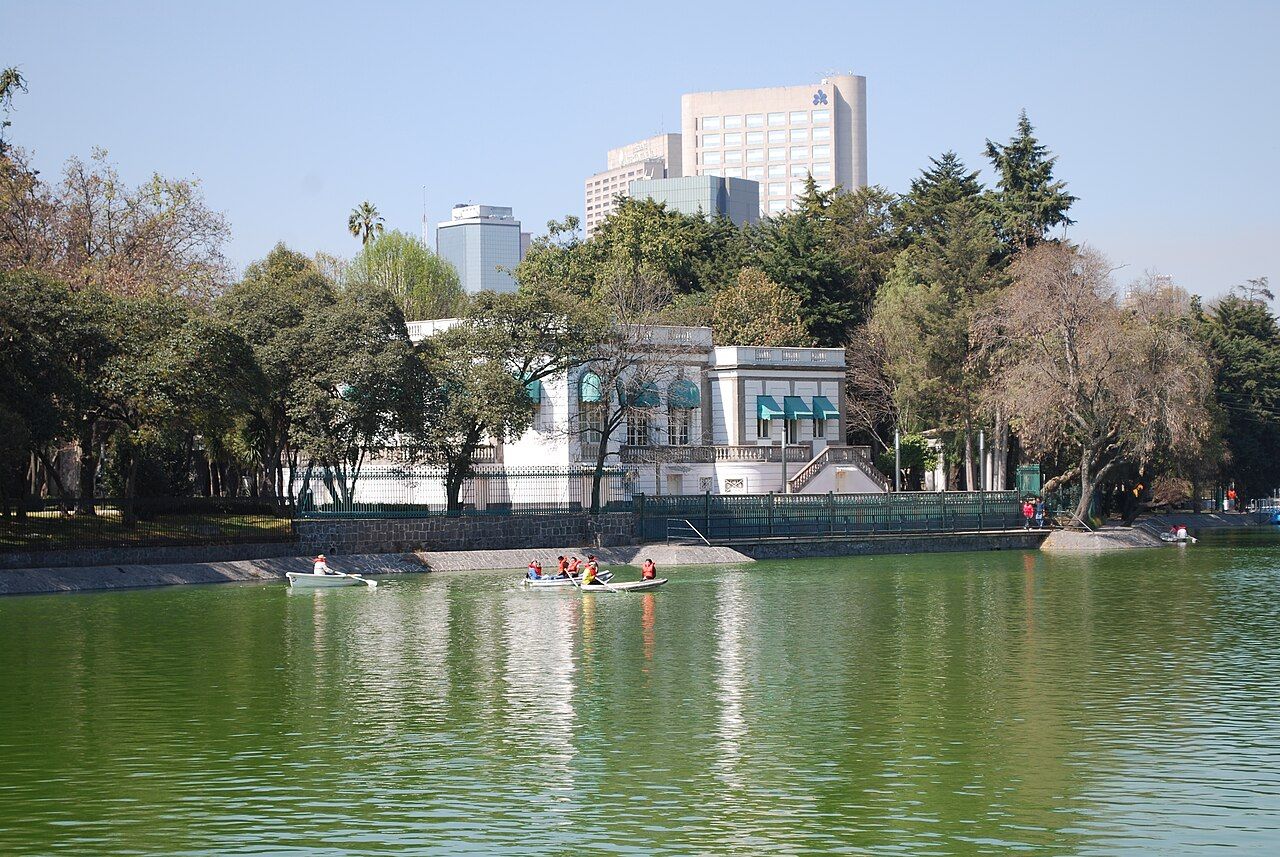
Below the castle, the old lake of the first section is ringed with paths and old trees, and you can rent a rowing boat or pedal boat for a slow circuit. It is a classic weekend outing for families and couples. Around it are fountains, monuments and long avenues under ahuehuete trees, the cypress species that the Mexica revered; some ancient specimens survive in the park, the most famous now just a great dead trunk.
On the lake's edges you will see families on picnic blankets, vendors with balloons and toys, and the occasional wedding party posing for photographs under the trees. It is one of the best places in the city simply to watch daily life, and a bench by the water is a fine spot to recover after the climb to the castle.
Chapultepec Zoo sits within the first section too, and has long been free to enter, though it may charge for some areas. 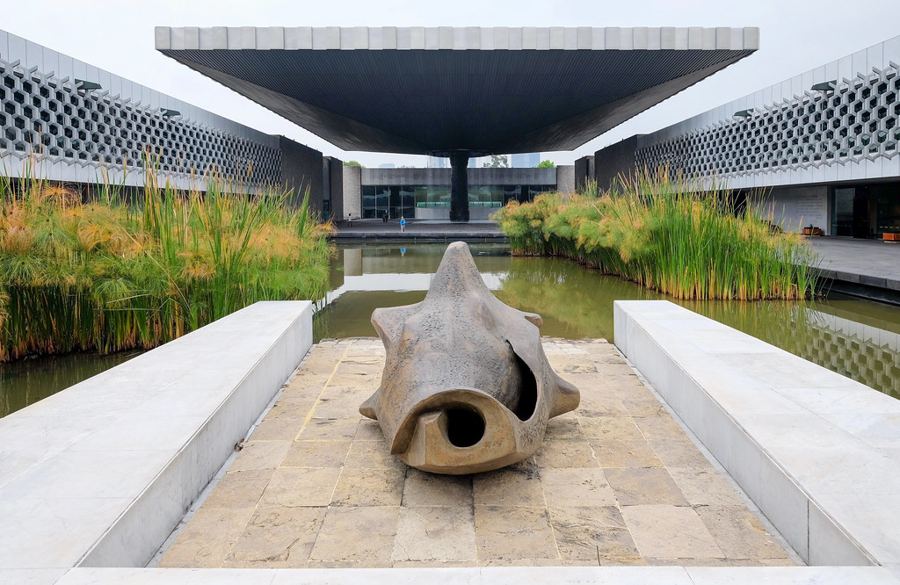 Transfer to station 2·01The National Museum of Anthropology in one visit Elsewhere, there are botanical gardens and stretches of quiet woodland if you head away from the main paths. The axolotl, the city's strange native salamander, has its own small museum in the park.
The museums around the park
Chapultepec is ringed with some of the country's best museums. The largest by far is the National Museum of Anthropology, on the north side of the park, which deserves at least half a day of its own. Near it are the Museo Tamayo, a modern concrete building for contemporary art, and the Museo de Arte Moderno, with Mexican painting of the twentieth century including works by Frida Kahlo, Remedios Varo and others. On the slope below the castle, the Museo del Caracol is a spiral gallery of dioramas about Mexico's long struggle for freedom.
The trick is not to plan too many in one day. The castle and anthropology museum alone can fill a long day; pair one of them with a gentle walk around the lake and one smaller museum. Most of these close on Mondays, and some offer free entry for residents on Sundays, which makes Sundays especially crowded.
Mondays, Sundays and practical sense
From the castle terraces you can see Reforma run straight toward the centre, the avenue Maximilian laid out to link his palace with the city.
The first section of Chapultepec has long closed on Mondays for cleaning and maintenance, and the castle and nearly all the museums close then too. Plan your Chapultepec day for Tuesday to Saturday. Sundays bring huge crowds of families, vendors and long lines, which is lively but slow; if you go on a Sunday, arrive early.
The park is big and the altitude adds to the effort, so carry water, a hat and sunscreen. Paths are mostly paved, and there are many benches. Keep a close hand on bags in the busiest areas near the entrances and Metro stations. For getting back, Metro Line 1 heads east toward the Centro, and Reforma's bike lanes and Metrobús run along the north edge toward the Angel of Independence. From the southern edge of the park, Condesa is a short walk or ride, which makes Roma and Condesa a natural place to finish the day.