Paseo de la Reforma is Mexico City's showpiece avenue. It runs diagonally from Chapultepec Park toward the historic centre, lined with towers, statues and wide walkways under trees, and it is where the city goes to celebrate, march and protest. Just north of its central stretch lies Colonia Juárez, an older neighbourhood of mansions, plazas and small streets. Together they make an easy half-day walk.
An avenue built for an emperor
Reforma began in the 1860s, when Emperor Maximilian had a straight road laid out from his palace at Chapultepec Castle toward the city, modelled on the grand boulevards of Europe. After his fall and execution, the Republic renamed it after the liberal Reform laws, and in the decades that followed, under Porfirio Díaz, it became the place to build monuments and fine houses.
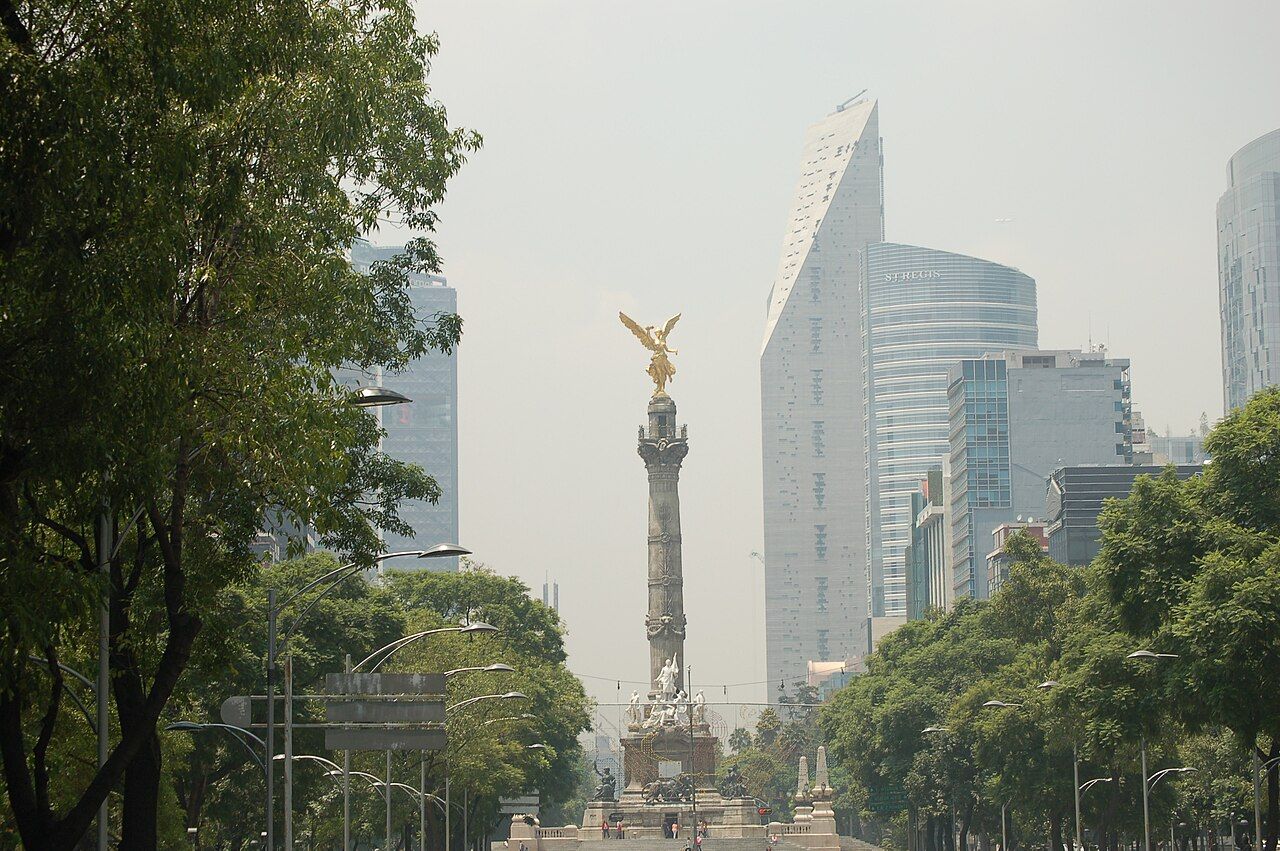
Most of the mansions have gone, replaced by office towers, but the monuments remain, set in the middle of the large roundabouts known as glorietas. Many of the towers along the avenue have been built since the 1990s, making Reforma the city's tallest corridor. The wide side walkways and central strips are shaded and lined with benches and rotating outdoor photo exhibitions on the fences of Chapultepec.
The Angel of Independence and the glorietas
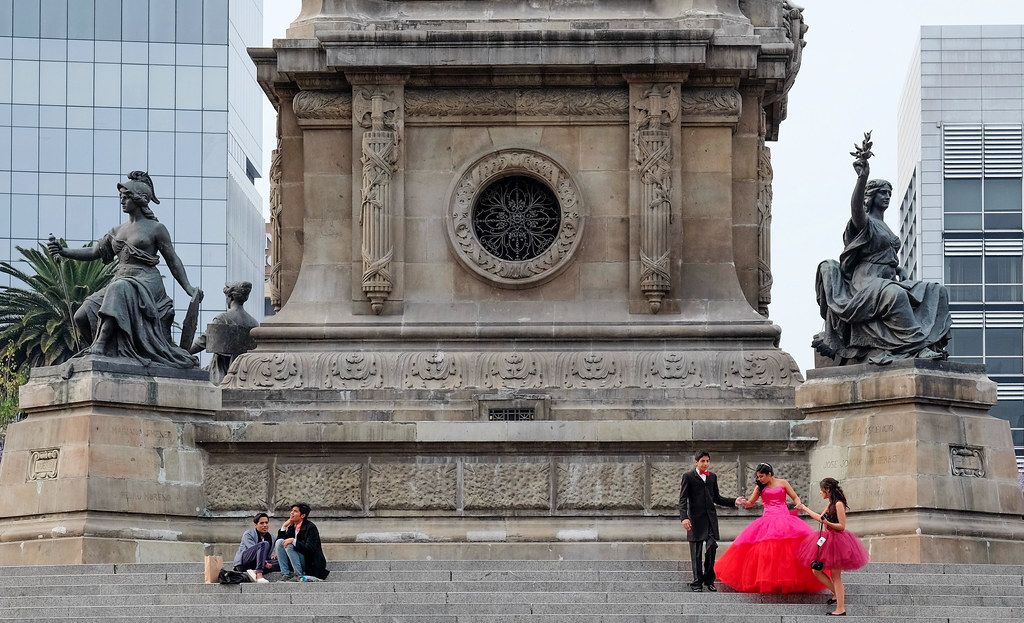
The great landmark is the Angel of Independence, a tall column topped by a gilded winged figure, inaugurated in 1910 for the centenary of independence. At its base, a mausoleum holds the remains of heroes of the independence war. In the 1957 earthquake, the gilded figure fell from the column and broke; it was restored and put back. The Angel is where crowds gather to celebrate football victories and where many marches begin or end, so the glorieta is sometimes fenced off. When it is open, there are often guided visits to the base.
Walking northeast from the Angel, you pass a series of glorietas, each with its own monument. The one at the crossing with Avenida Insurgentes holds a monument to Cuauhtémoc, the last Mexica ruler. Further along, a statue of Christopher Columbus once stood, removed in 2020; the space has since become a focus of protest and debate about memory and colonial history. For many years one glorieta held a tall palm tree, which died and was replaced in 2022 by a young ahuehuete, Mexico's national tree.
Southwest of the Angel, toward Chapultepec, the Diana the Huntress fountain shows a bronze archer aiming her bow at the sky.
Sunday: the avenue without cars
On Sunday mornings, a long stretch of Reforma closes to motor traffic for cyclists, runners, walkers, skaters and families, under a city programme that has run for years. The avenue becomes a slow parade, with free bicycle loans at times, exercise classes and music. It is the best time to walk Reforma, because you can stand in the middle of the road and look at the monuments without the roar of traffic.
The city's public bike share has stations all along Reforma and through Juárez, and can be used by visitors with a short-term pass. On weekdays, cycle lanes run along the avenue.
Colonia Juárez: mansions and side streets
Colonia Juárez grew up in the late nineteenth and early twentieth centuries as one of the first smart suburbs outside the old city, and its streets are named after European cities: Hamburgo, Londres, Liverpool, Berlín, Marsella. Some of the old mansions survive with their stone facades, iron gates and mansard roofs, now used as offices, embassies and cultural spaces. 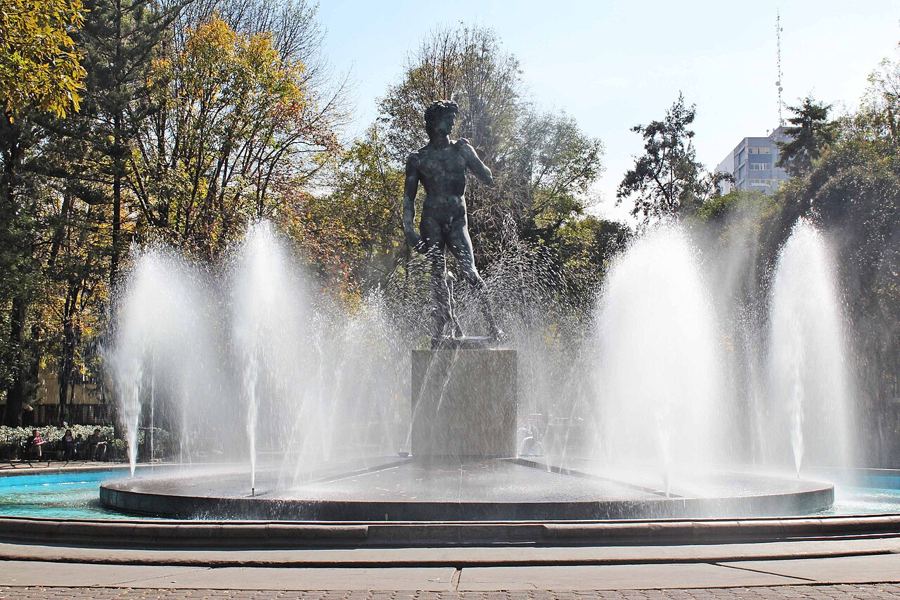 Transfer to station 1·02Roma and Condesa on foot The Zona Rosa within it became an arts and nightlife district in the 1960s and remains a hub of the city's LGBTQ community. Today parts of Juárez are busy with new building and conversions, while side streets such as those around Havre and Marsella keep a quiet residential feel.
A walk through Juárez is mostly about the facades. Look for the turreted houses, carved doorways and art nouveau ironwork among the newer buildings, and the small plazas and trees where people sit at lunch. The east end of the colonia runs toward Avenida Bucareli and the edge of the Centro.
The Monument to the Revolution
North of Reforma, on the Plaza de la República, stands the Monumento a la Revolución, a huge domed arch of stone and copper. It started as the central dome of a legislative palace planned under Porfirio Díaz, left unfinished when the Revolution broke out. In the 1930s the steel frame was clad and turned into a monument, and the remains of several revolutionary leaders, including Francisco Madero, Venustiano Carranza and Pancho Villa, were placed in its pillars.
Underneath, a museum covers the Revolution, and a glass lift takes visitors up to a viewing terrace under the dome, with views along Reforma toward Chapultepec and the Centro. The plaza around it has fountains that children run through on warm days.
Putting the walk together
A good route starts at Chapultepec, passes the Diana fountain and the Angel, cuts through Juárez's side streets, then rejoins Reforma and finishes at the Monument to the Revolution. It takes half a day at an easy pace. From there, you are about fifteen minutes' walk from the Alameda and the Palacio de Bellas Artes, and Metro Revolución on Line 2 takes you to the Centro Histórico.
Reforma is well lit and busy, but it is a long, wide road with fast traffic on weekdays. Cross only at marked crossings with lights, and do not try to dash across the glorietas. On busy protest days, some stretches may close; it is best to follow police directions and choose another route.