Tepoztlán lies in the state of Morelos, south of Mexico City, in a green valley ringed by tall, eroded cliffs of red and grey rock. It is a Pueblo Mágico, one of the towns the government lists for their character, and a favourite weekend escape for people from the capital. Most come for two things: the climb to the small Aztec-era temple on the ridge above town, and the great sixteenth-century convent in its centre.
The road south over the ridge
Buses to Tepoztlán leave from the Terminal Sur, the southern bus station next to Tasqueña on Metro Line 2. The ride usually takes about an hour and a half, more on weekends when traffic backs up on the highway. Fares and schedules on this route move from time to time, so double-check them before the day out.
The road climbs out of the southern edge of the city through pine forest to a pass at around three thousand metres, high above the valley floor, then drops steeply toward Morelos. You lose more than a thousand metres of altitude on the way down, and you feel it: the air turns warmer and softer, and the pines give way to tropical trees and bougainvillea. Tepoztlán sits at about 1,700 metres, noticeably lower than the capital, so the day will be warmer than you expect.
The bus drops you on the edge of town. From there it is a short, uphill walk into the centre along the main street.
The climb to the Tepozteco
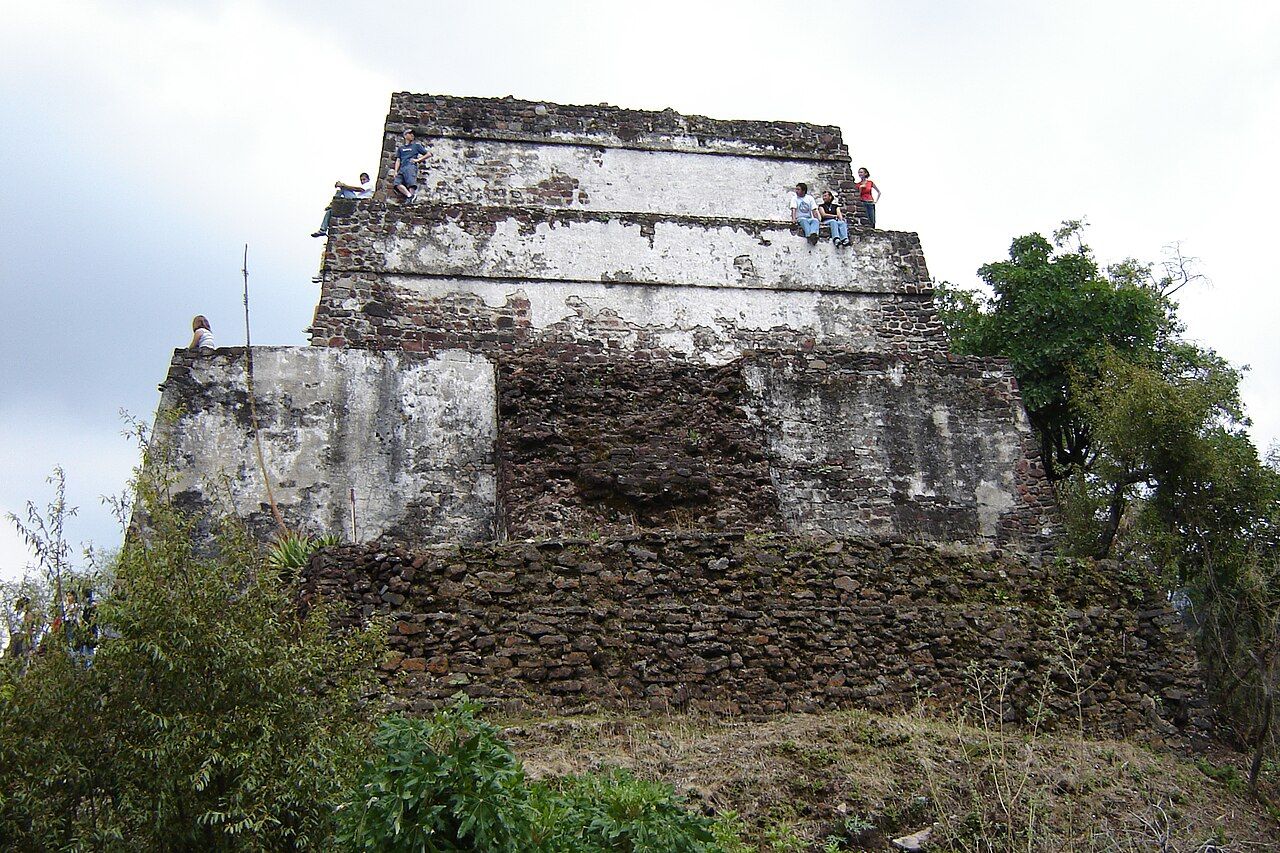
High on the cliffs above town stands the Tepozteco, a small stone pyramid temple built by the Tlahuica people and dedicated to Tepoztécatl, a god linked with pulque, the old fermented drink of the agave, and with fertility. It is not large, but its setting, on a ledge looking straight down into the valley, is spectacular.
The path starts at the north end of the main street and climbs about four hundred metres in less than two kilometres, almost all of it on rough stone steps and rock through forest. Most people take between forty-five minutes and an hour and a half to reach the top, depending on fitness and crowds. The last stretch includes metal stairs fixed to the rock. It is steep, uneven and slippery after rain; good shoes matter more than anything else.
At the top there is a small fee to enter the temple area. The path and the site are closed on some days and have been closed for long periods in the past, after fires, storms and disputes. Coatis, small raccoon-like animals, live on the ridge and will try to take food; do not feed them. Start early, both for cooler air and to stay ahead of the weekend crowds, and leave enough time to come down slowly, since descent is where knees and ankles suffer.
The Dominican convent
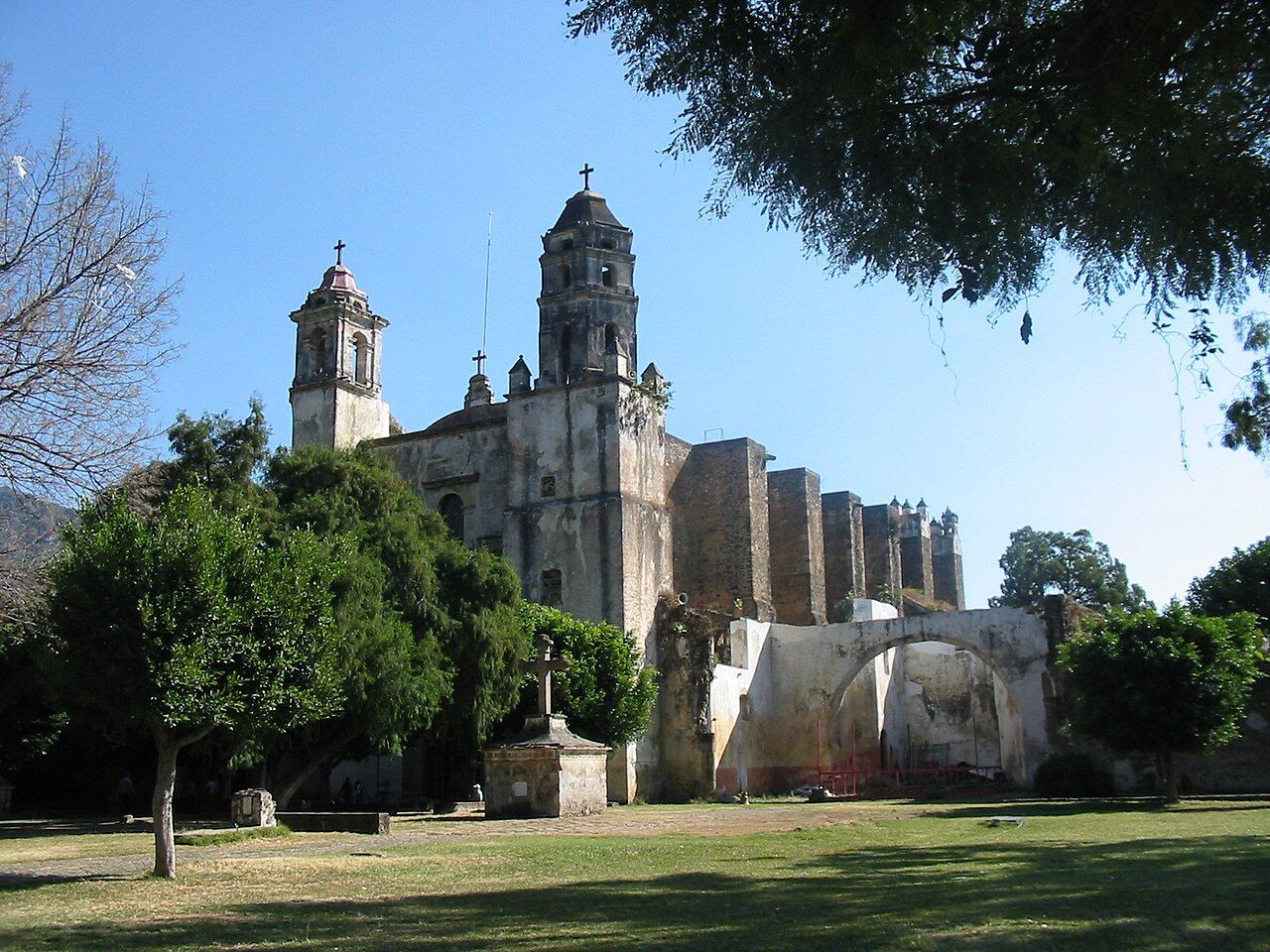
In the centre of town stands the former convent of the Nativity, built by Dominican friars in the sixteenth century with Indigenous labour. With its thick walls and battlemented outline it looks almost like a fortress, and it is part of a group of early convents on the slopes of Popocatépetl listed by UNESCO as a World Heritage Site.
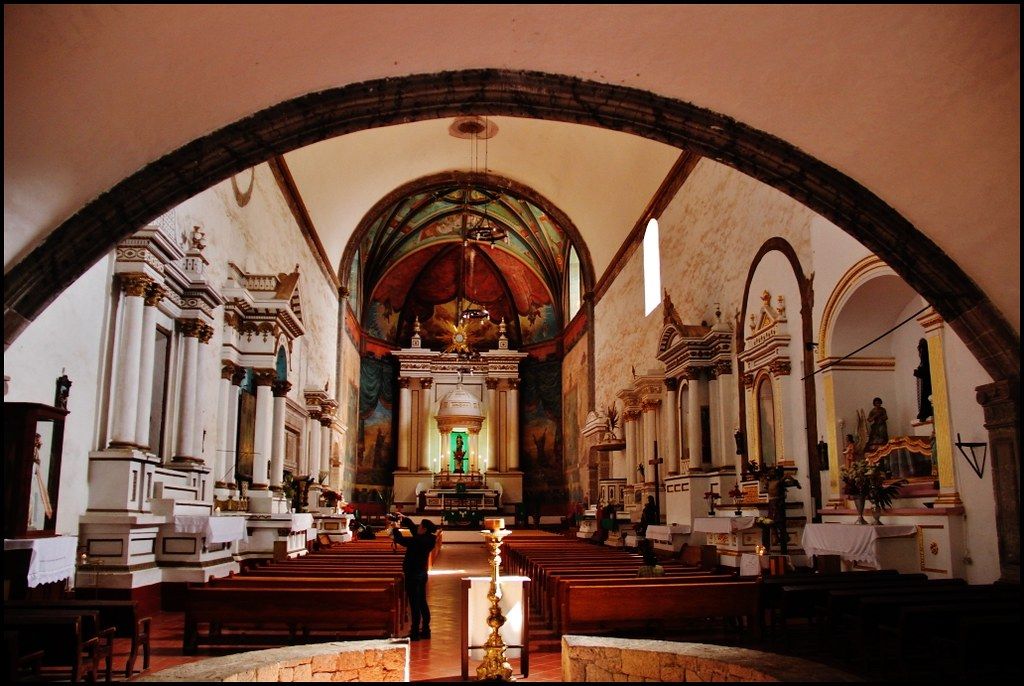
The church is still in use. Inside, its long nave rises to a painted vault above a white and gold altar, and the side chapels hold carved saints and flowers left by local families.  Transfer to station 3·02The Basilica of Guadalupe Next door, the old cloister houses a museum, with traces of the friars' wall paintings in the corridors, and an upper floor with views of the cliffs from the open arches.
The church's entrance arch is decorated each year with a mural made of seeds, a local tradition tied to the town's festival of the Nativity in September, so look closely at the gateway as you come in. The large atrium in front of the church is a calm place to sit after the climb.
Weekends, markets and festivals
Tepoztlán is quiet on weekdays and busy at weekends, when the streets fill with visitors from the capital and the main road through town becomes a long line of stalls. The town also holds its market on set days of the week, when it is at its most crowded and lively. If you want a calm walk and a less crowded path up the Tepozteco, go on a weekday.
The town has its own festivals through the year, including the carnival before Lent, with masked chinelo dancers in long velvet robes, and the festival of the Tepozteco in September. They are colourful and loud, and they fill the town completely.
As in the city, you will be offered all kinds of goods along the main street. A polite no is enough. Keep the day light and simple: the cliffs, the temple and the convent are the reasons to come.

Time at Tepoztlán
A simple plan is an early bus, the climb first while it is cool, a rest in town at midday, then the convent and its museum in the afternoon before the return bus. Buy your return ticket on arrival if you are travelling on a Sunday afternoon, when many people head back to the capital at once. If you would rather not rush, the town has many places to stay, and staying a night lets you see the cliffs at sunset and the streets quiet in the morning.
The climb comes after a drop in altitude, which helps, but if you have just arrived in Mexico, the guide to altitude, air and earthquakes is worth reading first. For a bigger, more urban trip in the same direction, see Puebla and Cholula; and for a first taste of pre-Hispanic sites closer to the city, Teotihuacán makes the obvious pairing.