San Ángel lies in the southwest of Mexico City, just west of Avenida Insurgentes and a short ride from Coyoacán. It began as a village around a Carmelite convent and grew into a retreat of country houses for wealthy families from the city. The city has long since surrounded it, but the old core keeps its cobbled lanes, stone walls covered in bougainvillea and quiet plazas. On Saturdays it fills up; on other days it is one of the calmest corners of the south.
Plaza San Jacinto and the Saturday art fair
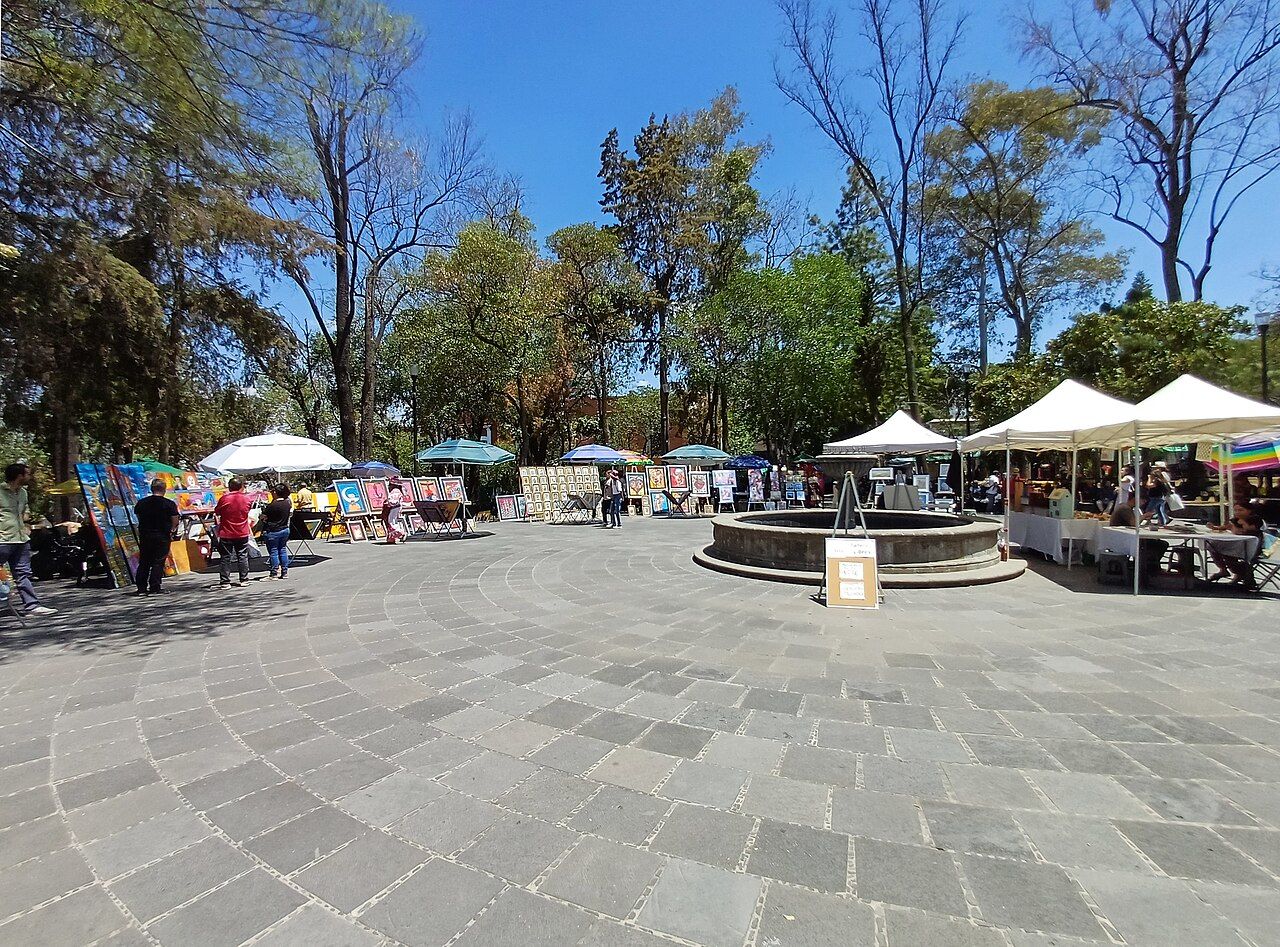
The heart of San Ángel is Plaza San Jacinto, a sloping square of trees and benches. On Saturdays, painters set up their canvases across the plaza and the neighbouring Plaza del Carmen in an open-air art fair that has run for decades. Most of what you see is landscape, still life and city scenes, from the decorative to the genuinely skilled, and the artists are usually happy to talk about their work. Browsing costs nothing, and it is a good way to see what people are painting in the city now.
The fair is busy from mid-morning until late afternoon. Bring cash if you might buy, and if you are interested in a painting, ask about the price politely; light bargaining is fine, but this is the artist's living. Cars crawl through the narrow streets on Saturdays, so walking in or arriving early is easier than driving.
On the north side of the plaza, the Casa del Risco is an eighteenth-century house turned into a small museum, known for a courtyard fountain covered in pieces of Chinese porcelain, tiles and shells.
Cobbles, walls and the church of San Jacinto
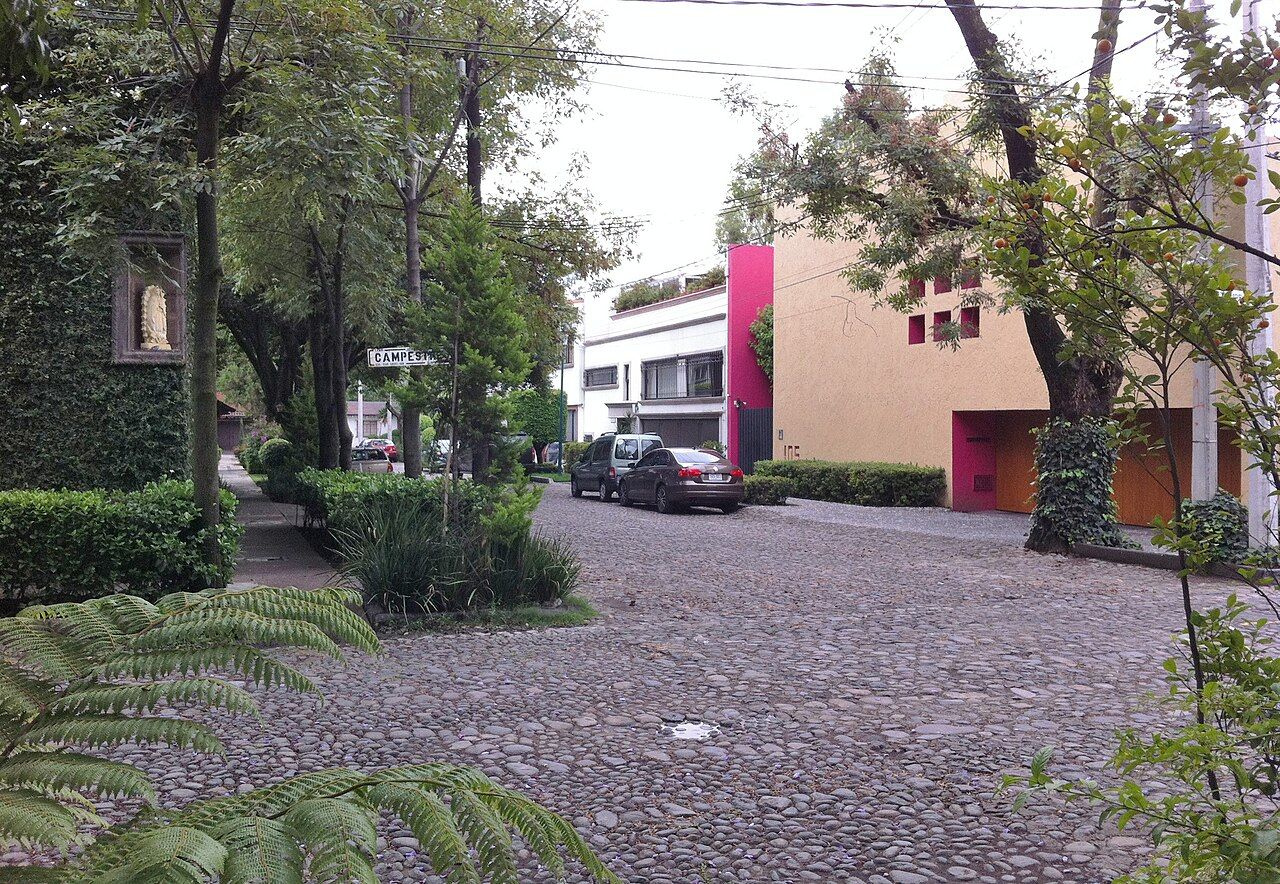
Step off the plaza and the streets narrow. Lanes such as Calle Hidalgo, Frontera and the streets climbing toward the old church of San Jacinto are paved with uneven cobbles and lined with high walls, heavy wooden doors and the tops of trees peeking over. Behind them are some of the city's most expensive private houses, so this is a walk of glimpses rather than visits.
The small church of San Jacinto, at the end of a lane off the plaza, dates from the sixteenth century and has a walled garden in front. It is a working church; be quiet and respectful if you look in.
Museo de El Carmen and its mummies
A few minutes east of the plaza, on Avenida Revolución, stands the former convent of El Carmen, built by Carmelite friars in the early seventeenth century and the building that gave the whole area its name. Its domes are covered in coloured glazed tiles, and inside you walk through cloisters, cells and chapels hung with colonial paintings.
The famous part is underground. In the crypt, a number of naturally mummified bodies are displayed in glass cases. The usual story is that they were found during the Revolution, when soldiers opened the burial vaults looking for treasure. Nobody is quite sure why they dried out so well, and seeing them is strange and sobering rather than ghoulish. If you are travelling with young children, it may be better to look first yourself.
The museum is usually closed on Mondays.
 Transfer to station 2·01The National Museum of Anthropology in one visit
The Diego Rivera and Frida Kahlo house-studios
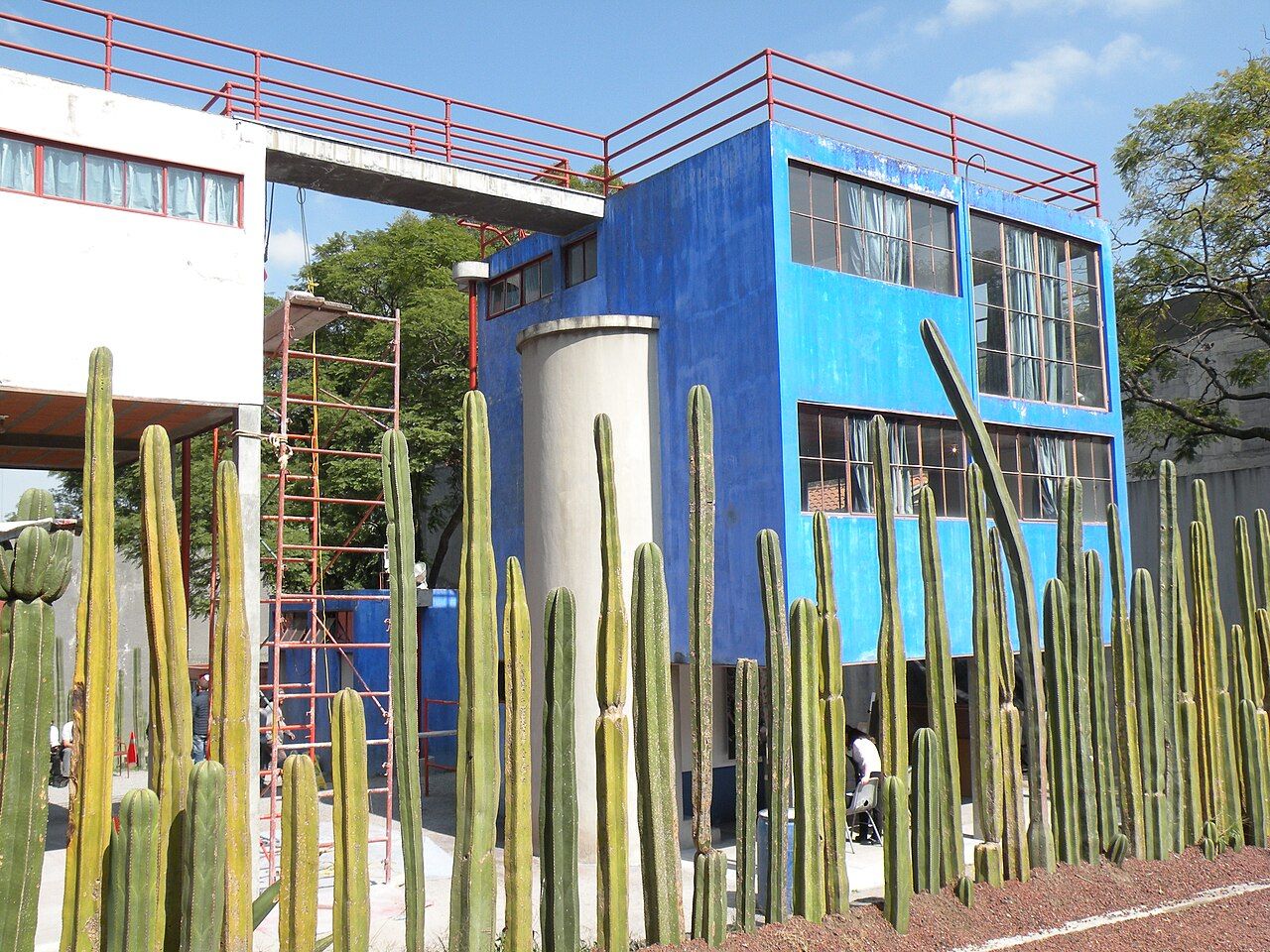
Ten minutes' walk northwest of Plaza San Jacinto, at the corner of Altavista and Diego Rivera streets, are two of the first modernist buildings in Mexico. The young architect and painter Juan O'Gorman designed them for Diego Rivera and Frida Kahlo in the early 1930s, a large one in red and white for him and a smaller blue one for her, linked by a narrow footbridge at roof level. A fence of organ-pipe cactus surrounds the plot.
The houses were radical for their time: bare concrete, exposed pipes and wiring, big factory-style windows, an outside spiral staircase. Rivera worked in his studio here for much of the rest of his life and died in the house in 1957. Today it is the Museo Casa Estudio Diego Rivera y Frida Kahlo, showing his studio with its papier-mâché figures and brushes, and the smaller house where she lived for some years. Nearby stands a house O'Gorman built for his own father.
Pair this with the Blue House in Coyoacán and you see two sides of the couple's life. The house-studios are smaller and far less crowded, and you rarely need to book, though rules and hours change. They are closed on Mondays.
The approach to San Ángel
Metrobús Line 1 runs down Avenida Insurgentes and stops at La Bombilla, a short walk from the plazas through the Parque de la Bombilla. The park holds the large monument to Álvaro Obregón, the revolutionary general and president who was assassinated nearby in 1928. Metro Line 3's Miguel Ángel de Quevedo station is about twenty minutes' walk away. Taxis and ride-hailing cars are easy to find around the plaza, though Saturday traffic is slow.
San Ángel combines well with Coyoacán, about fifteen minutes away by car, or with Ciudad Universitaria, just south along Insurgentes. A good Saturday runs San Ángel in the morning and early afternoon, with the plaza first, then El Carmen and the house-studios, and Coyoacán's livelier plazas toward evening.
Practical sense
The cobbles are hard on ankles and soft shoes; wear something with grip. There is little shade on the plaza at midday, so a hat helps. San Ángel is a calm and generally comfortable area, but the Saturday crowds bring the usual risk of pickpockets, so keep valuables in a zipped bag. If you only have one day for the south, choose between San Ángel and Coyoacán based on your interests: the art fair and quiet lanes here, or the busier plazas and the Kahlo museum there.