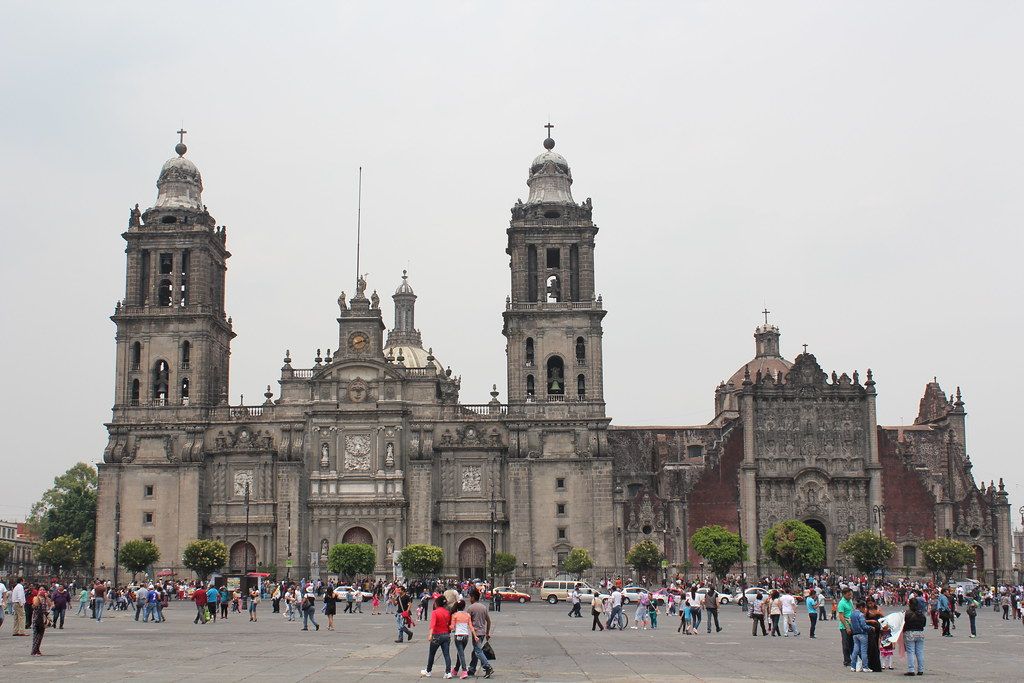
Every road in Mexico City seems to run back to one square. The Zócalo, formally the Plaza de la Constitución, sits on top of the ceremonial heart of Tenochtitlan, the island city the Mexica built in a lake and the Spanish razed in 1521. The cathedral, the seat of government and the old palaces of the viceroys all went up on the ruins. Start here, in the morning, and work outward.
The Zócalo itself
The first surprise is the size. The square is a vast paved field with almost no shade and a giant flag in the middle, raised and lowered by soldiers in a short ceremony most mornings and evenings. Depending on the week, you may find it empty and echoing, fenced off for a concert or a book fair, or full of protest camps. That is normal. The Zócalo is the country's front yard, and the government, unions and campaigners all use it.
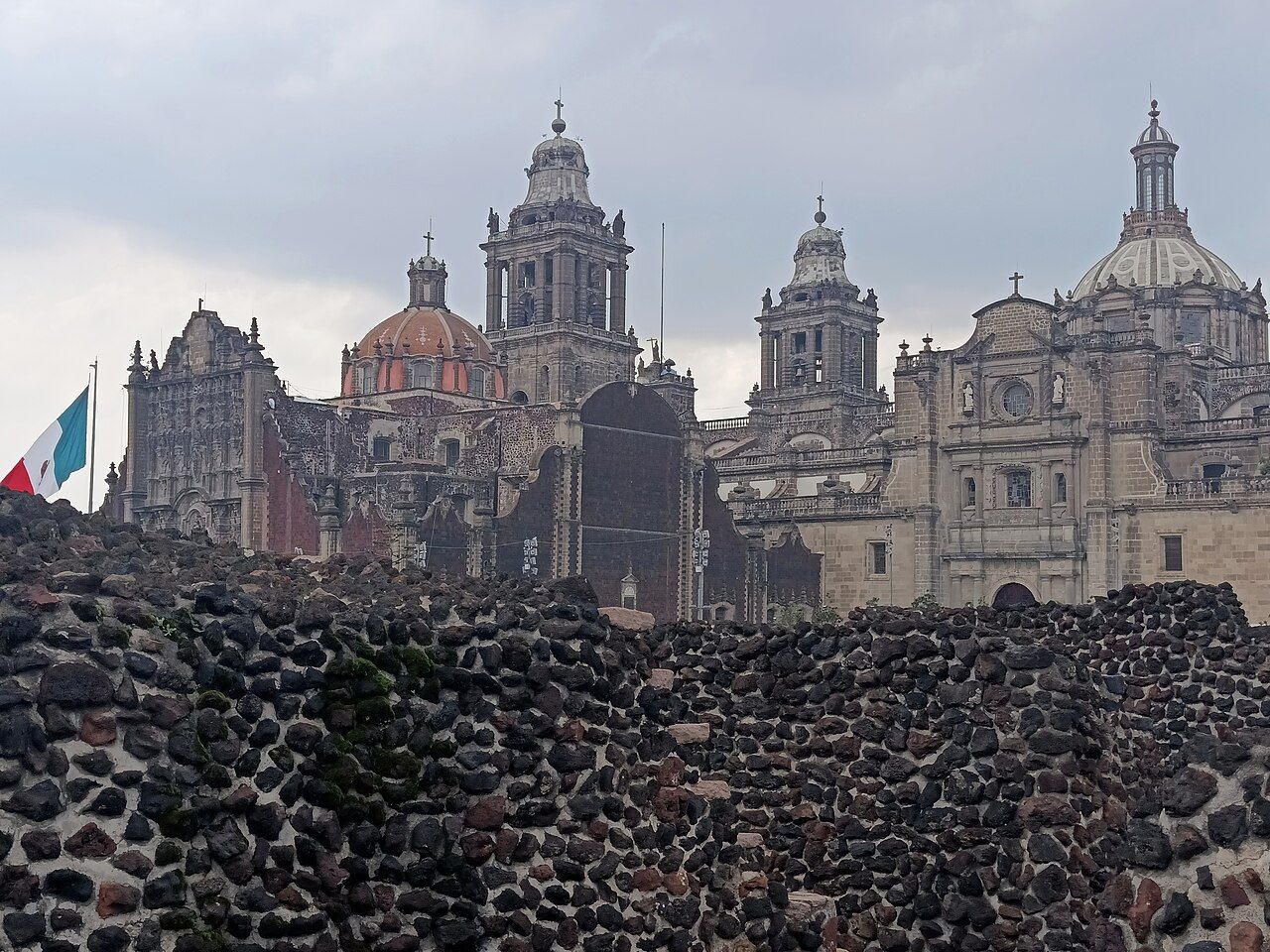
Stand in the middle and turn slowly. To the north is the Metropolitan Cathedral, to the east the long red front of Palacio Nacional, and on the other sides the arcaded city government buildings and old commercial blocks. In the northeast corner the pavement breaks open onto the excavated stones of the Templo Mayor.
The Metropolitan Cathedral and the sinking city
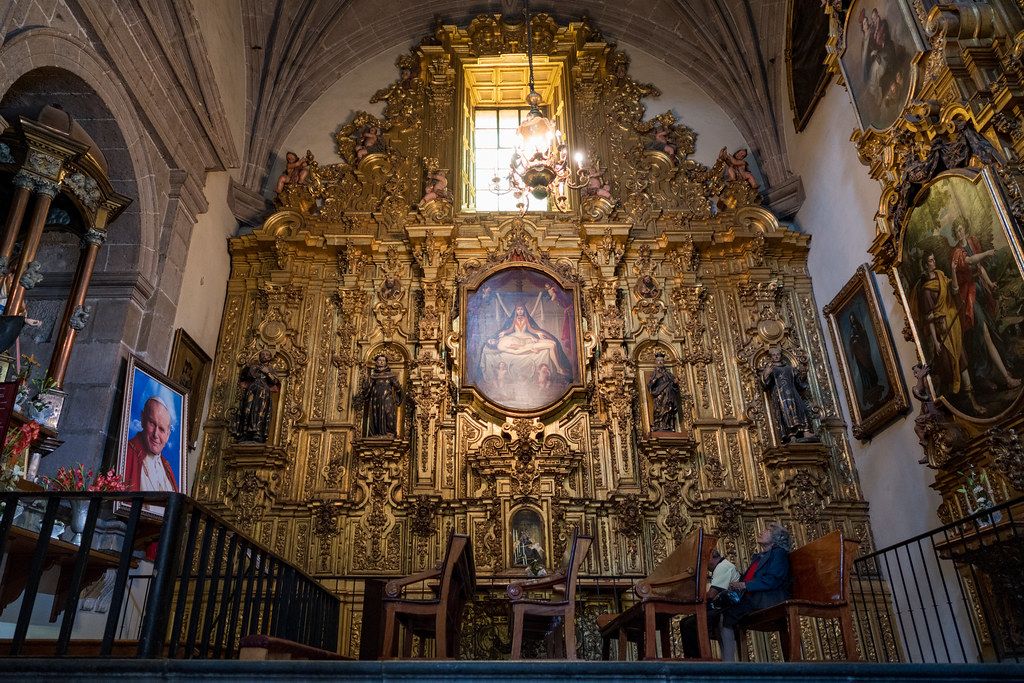
The cathedral took close to three centuries to build, from the late 1500s into the early 1800s, which is why it mixes Renaissance, Baroque and Neoclassical styles in one front. Inside, the great gilded Altar of the Kings behind the main altar is the piece most people come for. Entry to the main church is generally free; towers and special areas have sometimes been open on guided visits for a fee.
Look at the floor and the doorways and you start to notice that nothing is quite level. Mexico City stands on the soft clay of a drained lakebed, and the heavy colonial buildings have been sinking unevenly for centuries. The cathedral has needed major engineering work to stop it pulling itself apart. Next to it, the smaller Sagrario Metropolitano visibly tilts. Walk the Centro with this in mind and you see it everywhere: church towers out of plumb, palace steps that now lead down into the building, doorways sitting below the pavement.
Walk the Centro with this in mind and you see it everywhere: church towers out of plumb, palace steps that now lead down into the building, doorways sitting below the pavement.
Templo Mayor: the city under the city
For centuries the Mexica Great Temple was assumed lost under colonial streets. Then, in 1978, electricity workers digging near the cathedral struck a huge carved stone disc of the moon goddess Coyolxauhqui. The excavation that followed cleared a whole block of colonial buildings and exposed the layered bases of the twin-shrined temple, rebuilt over and over as each ruler enlarged it.
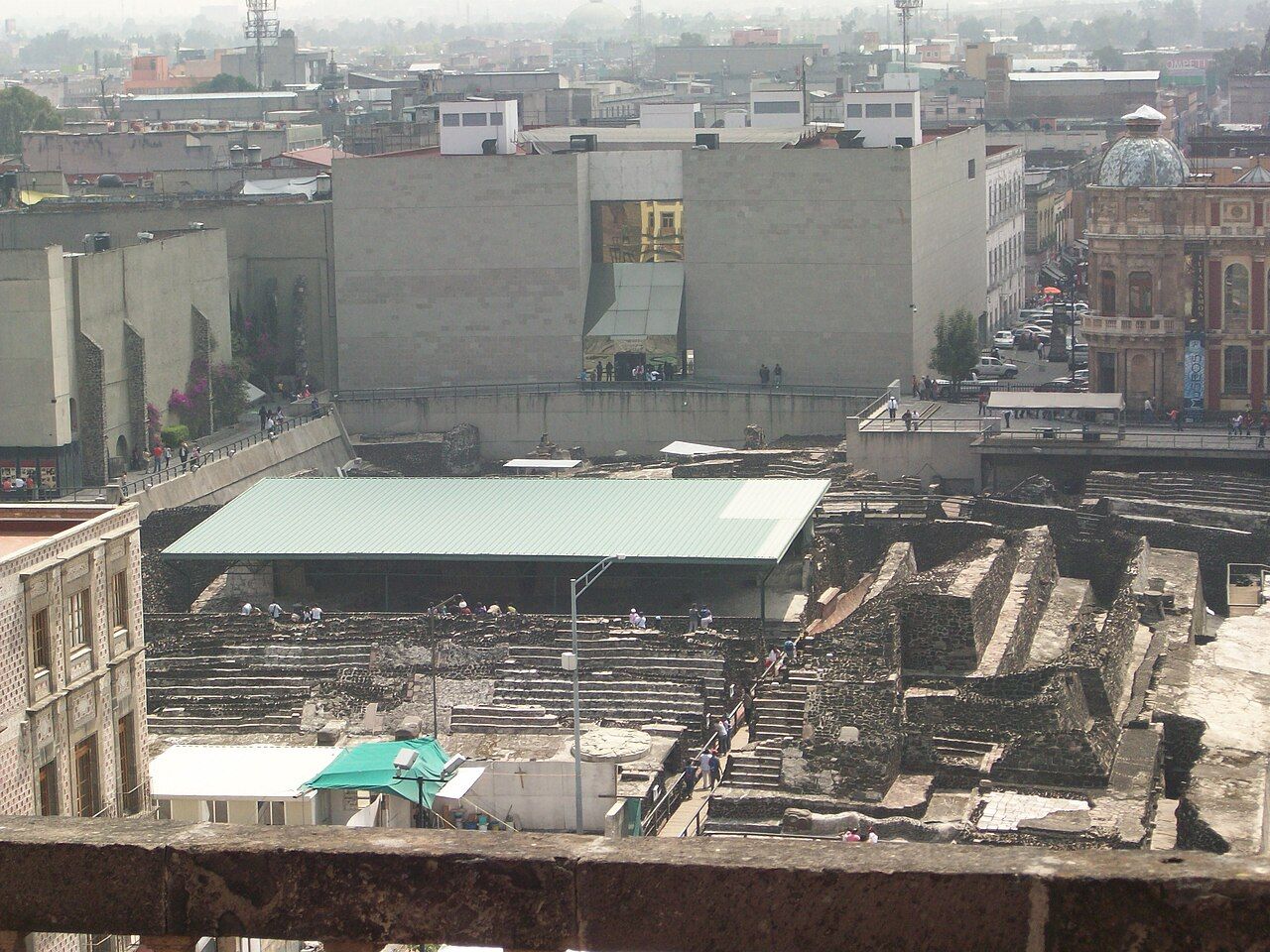
A walkway takes you across the ruins, where you can see serpent heads, painted stone and the stubs of older temples nested inside newer ones. The site museum next door holds the Coyolxauhqui stone, the great monolith of the earth goddess Tlaltecuhtli found nearby, and offerings dug out of the temple. Give the ruins and museum together two hours. Like most federal museums it is closed on Mondays; its hours and ticket prices get revised, so look them up the week you plan to go.
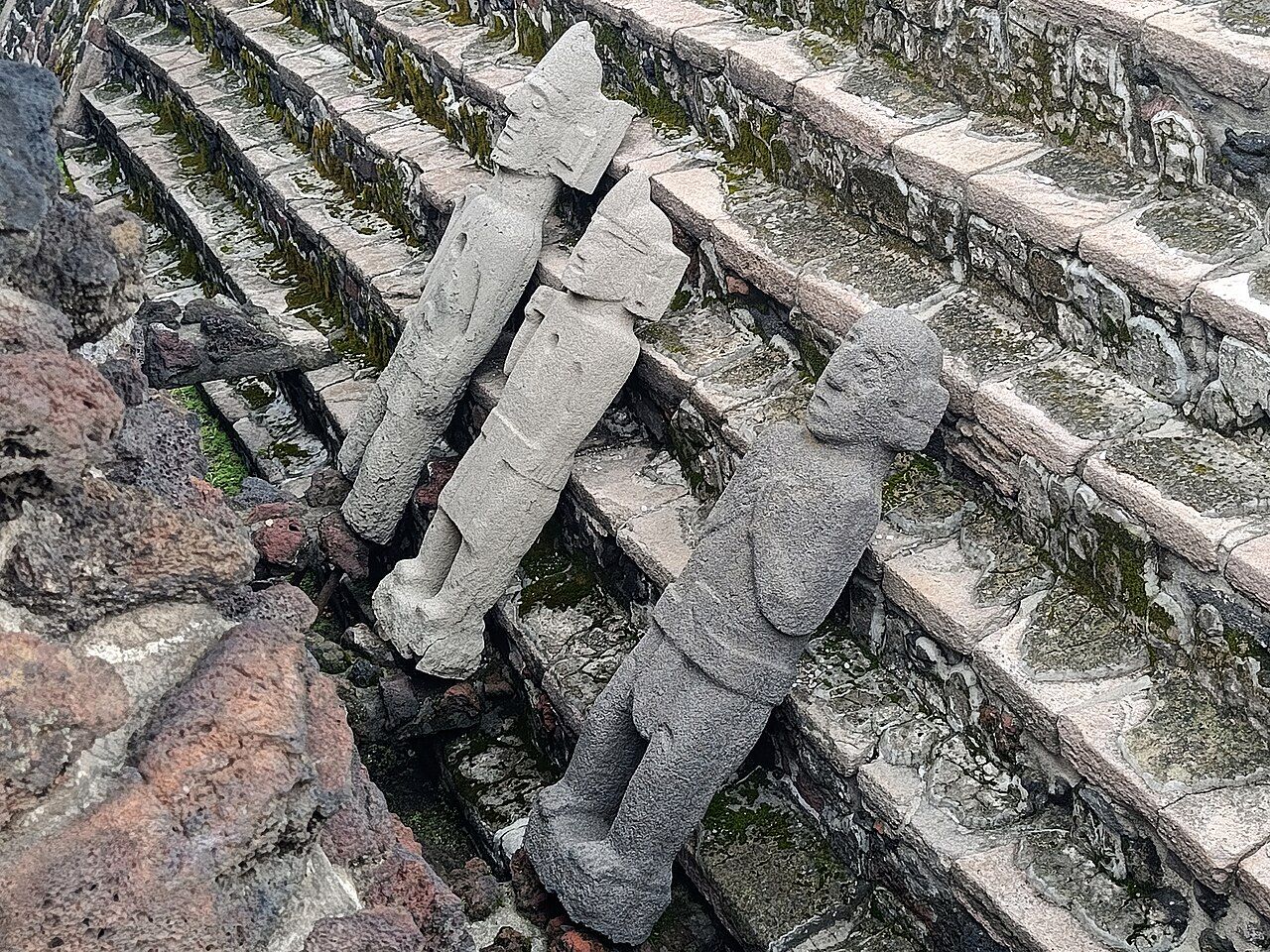
Once you have seen it, you notice how close the old city still is. Glass panels in the pavement around the cathedral show more foundations underneath, and the murals around the Centro often retell the same history in paint.
Palacio Nacional and the Rivera murals
The long building on the east side of the Zócalo stands where Moctezuma's palace stood, and it has been the seat of power since the Spanish took over. Today it holds government offices and, in recent years, the president's residence, which shapes the visit: there is a security check, you need photo ID, and access to the courtyards and murals has been suspended or limited at various times.
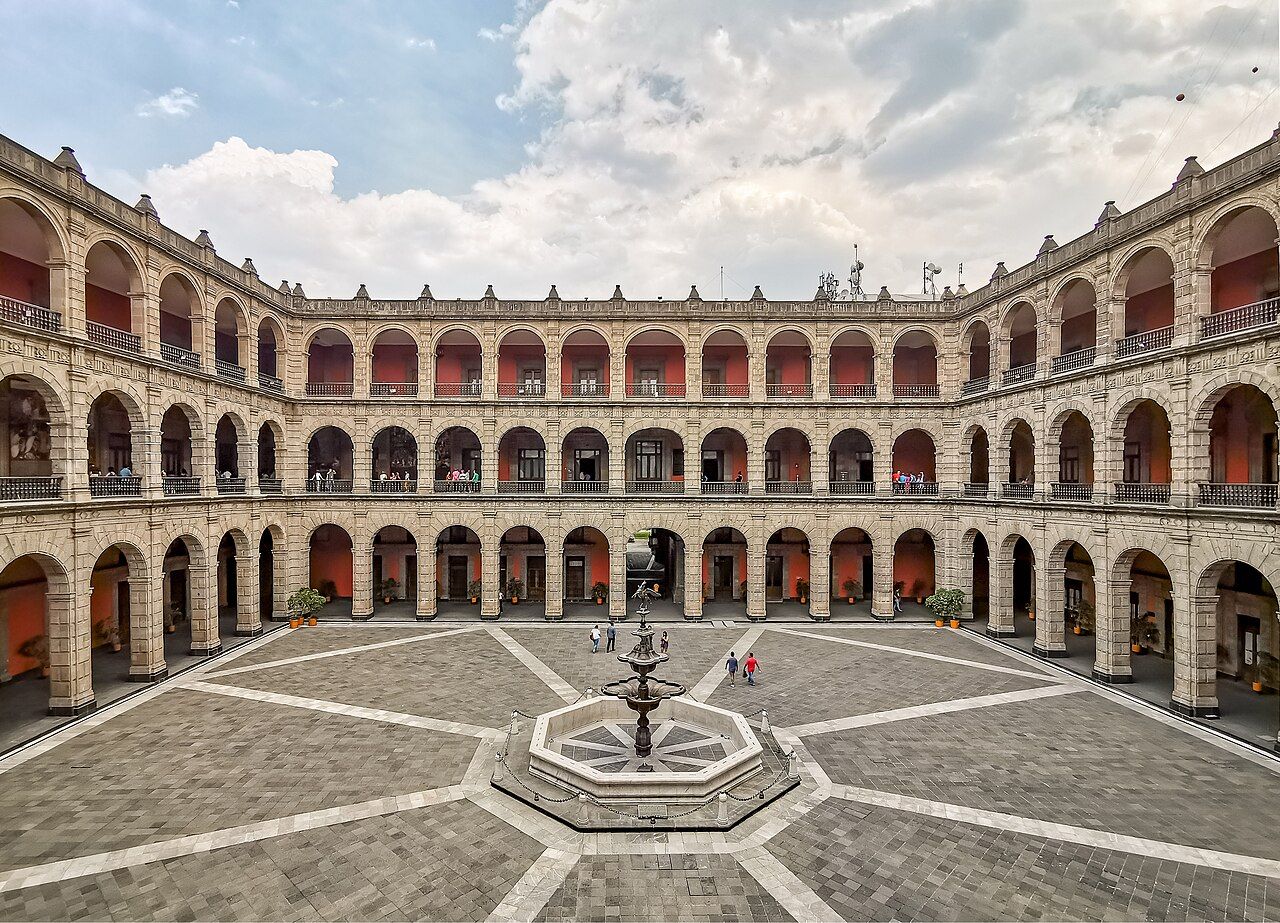
When it is open, the reason to go is Diego Rivera's mural cycle on the main staircase and the upper corridor. The staircase walls tell the history of Mexico in one crowded sweep, from the world before the conquest through the colonial centuries and the wars of independence to the Revolution, with a crowd of recognisable figures. Along the corridor, smaller panels show pre-Hispanic life, farming, crafts and the great market of Tlatelolco in rich detail. 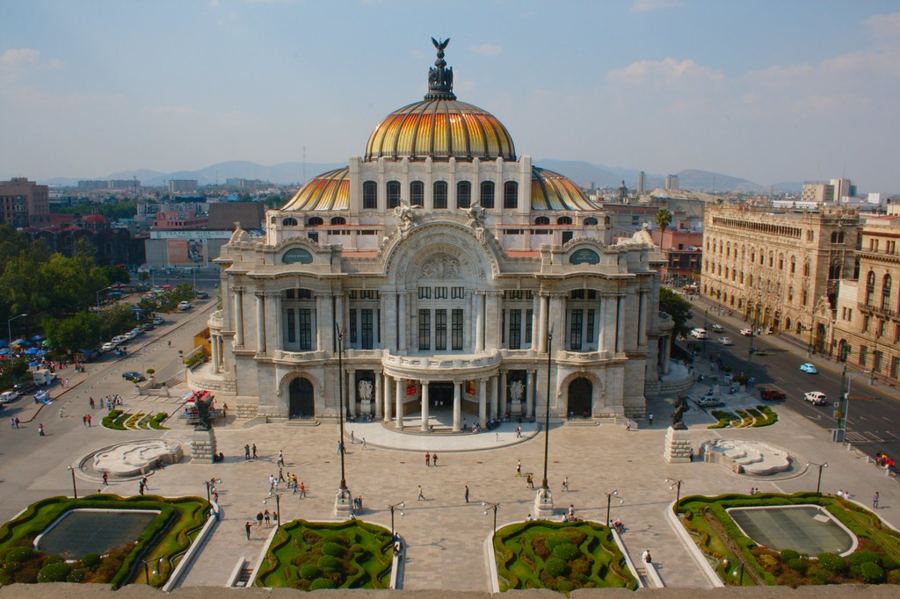 Transfer to station 2·02Palacio de Bellas Artes Take your time on the staircase; the composition is dense, and the longer you stand there the more stories you find inside it.
Madero and the streets west
From the northwest corner of the Zócalo, Avenida Francisco I. Madero runs west as a pedestrian street lined with old palaces, churches and shopfronts set into colonial and early twentieth-century buildings. It is one of the busiest pedestrian streets in the country, with buskers, families and office workers moving at all hours. Look up above the shop level for carved stone, wrought-iron balconies and tiled facades.
Halfway along, the colonial palace walls and church fronts give you a sense of how grand this street was under the viceroys. At the far end, Madero opens out at the Eje Central, with the white marble of the Palacio de Bellas Artes and the green Alameda Central across the road. That makes a natural finish to a morning: Zócalo, cathedral, Templo Mayor, then a slow walk west to Bellas Artes.
If you have more energy, the blocks north of the Zócalo hold the old customs house, the Santo Domingo plaza with its arcades and the former colleges and ministries where the big mural programmes of the 1920s were painted. South of the square the streets get more commercial and hectic, which is fine to wander in daylight.
Sundays, crowds and practical sense
The Centro has different moods across the week. Weekday mornings are the calmest time for the cathedral and Templo Mayor. Saturdays get busy. Sundays bring families, street performers and big crowds on Madero, and the Zócalo is often taken over by a scheduled event, so plans that depend on crossing the square can change. Government buildings, including Palacio Nacional, may be closed or restricted on weekends and public holidays, while most federal museums close on Mondays. The safest plan is to put Templo Mayor and Palacio Nacional on a Tuesday to Friday.
A few habits help. Keep phones and wallets in front pockets or a zipped bag, because the crowded corners and the Metro Line 2 platforms are where pickpockets work. Carry water and a hat: the Zócalo has little shade and the sun at 2,240 metres is strong even when the air feels cool. Remember that the altitude makes stairs harder than they look on the first days, as the guide to altitude, air and earthquakes explains. Public toilets exist but are few, usually inside museums or for a small coin charge.
Getting in is simple. Metro Line 2 stops right under the square at Zócalo/Tenochtitlan, and Allende station is two blocks away on the same line. If you are coming from Roma or Condesa, a ride-hailing app or a licensed taxi drops you close by, though traffic around the Centro moves slowly. At night, take an official taxi or a ride-hailing car back rather than flagging one on the street. The guide to riding the Metro and Metrobús covers the system.